Required section · Section 5 of 6
Choose the next laboratory action
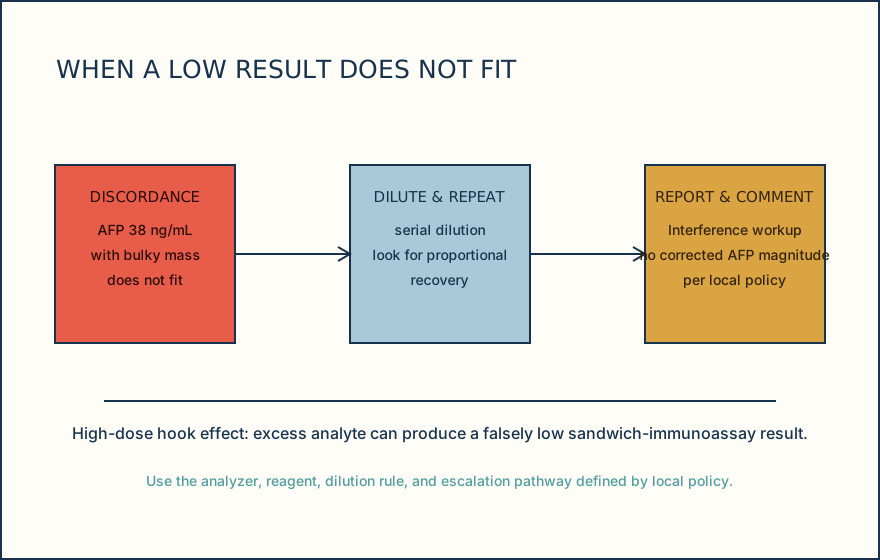
Return to the pre-orchiectomy case before seeing the dilution result. The relevant evidence is a 9 cm nodal mass, AFP 38 ng/mL, and a sandwich immunometric AFP method. The learner should rank the discordance above the fact that AFP is already flagged high. A mildly elevated value can still be falsely low in high-dose hook effect.
The preferred next laboratory action is serial dilution under local policy and review for proportional recovery. If the pattern does not recover proportionally, continue the local interference pathway, which may include alternate method testing or other investigation. Do not merely release the undiluted AFP as a complete answer, and do not state that a low result rules out a high-producing tumor. The action is bounded because exact dilution rules and analyzer limits are method specific.
The same reasoning applies to other mismatch patterns. Biotin can bias assays that use biotin-streptavidin chemistry, but direction and magnitude depend on the platform. With thyroglobulin, measure TgAb with each thyroglobulin result; an undetectable immunometric thyroglobulin is not reassuring when TgAb is present. When clinical suspicion and an immunoassay result conflict, investigate the measurement before interpreting the patient.
Illustrative drawing — this picture was drawn rather than captured.
Ordering exercise
Put the laboratory response to a clinically discordant AFP result in order.
1. Dilute and repeat
Use serial dilution as allowed by local policy.
2. Recognize the mismatch
Compare the result with imaging and clinical context.
3. Report resolved result
Use proportional recovery and communicate the bounded interpretation.
4. Verify method context
Review sandwich assay, reportable range, and local policy.
Knowledge checks
Reading and checks are open. Sign in only to save.
Knowledge check 1
Knowledge check 2
Section status
Finish this section
Reading and checks are open. Sign in only to save.
The module finishes after every required section is marked done and every check in those sections is correct.