Required section · Section 3 of 6
Routine domains and assay boundaries
Proteinuria can be confirmed by 24-hour urine protein of at least 300 mg, a spot protein-to-creatinine ratio of at least 0.30, or dipstick 2+ only when quantitative testing is unavailable. Severe-range blood pressure is at least 160 mmHg systolic or 110 mmHg diastolic, a clinical value that should be visible in the result review. Severe-feature laboratory thresholds include platelets below 100,000/µL, creatinine above 1.1 mg/dL or doubled from baseline, and AST or ALT at least twice the laboratory upper limit of normal.
HELLP refers to hemolysis, elevated liver enzymes, and low platelets. Elevated LDH, indirect bilirubin, low haptoglobin, or schistocytes on peripheral smear can support hemolysis. A hemolyzed specimen can spuriously elevate AST and LDH, so assess specimen quality before interpreting a hepatic or hemolysis pattern. Urine collection and handling must follow the laboratory's validated process: a collection outside that process can bias protein quantitation or classification and must follow the local rejection or qualification rule.
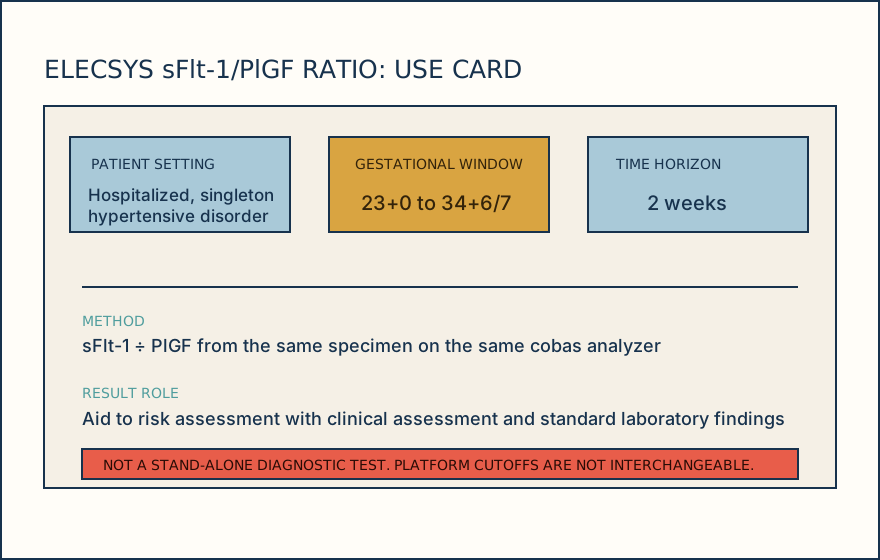
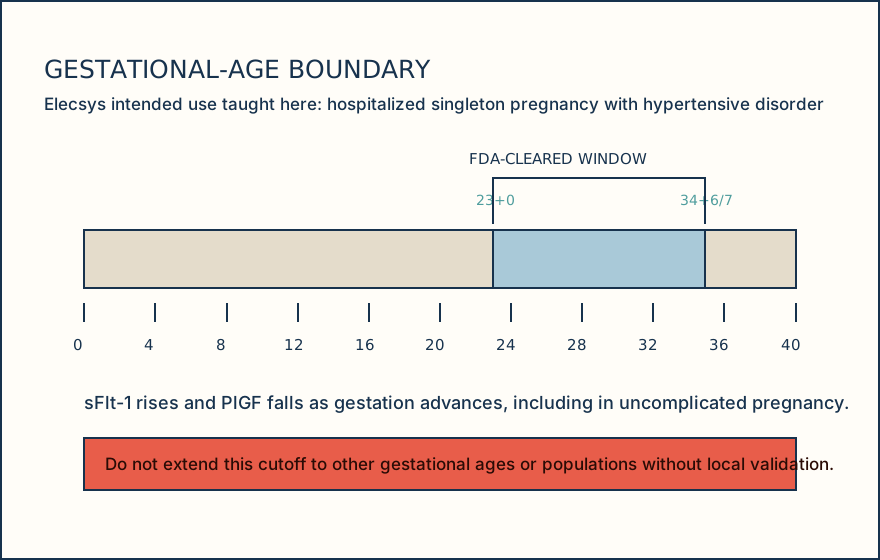
The ratio taught here is sFlt-1 in pg/mL divided by PlGF in pg/mL from the same specimen on the same compatible cobas immunoassay analyzer. The FDA-cleared Elecsys intended use is an aid to risk assessment with clinical assessment and other laboratory findings in hospitalized patients with a singleton pregnancy and hypertensive disorder at 23+0 through 34+6/7 weeks, for developing preeclampsia with severe features within two weeks. Individual assays are not intended to be used alone to report the ratio. A different platform such as BRAHMS KRYPTOR has separate authorization and its cutoff is not interchangeable.
CLIA requires the laboratory to establish or verify performance specifications before reporting patient results. Local policy must set critical-result thresholds, notification timing, escalation, pregnancy-specific intervals, and specimen acceptability. Multiple gestation, chronic hypertension, chronic kidney disease, treatment, or an out-of-window gestational age fall outside the stated Elecsys claim taught here. Verify the specimen, analyzer pairing, population, gestational age, and local policy before attaching any risk language to a released ratio.
Illustrative drawing — this picture was drawn rather than captured.
Illustrative drawing — this picture was drawn rather than captured.
Knowledge checks
Reading and checks are open. Sign in only to save.
Knowledge check 1
Knowledge check 2
Section status
Finish this section
Reading and checks are open. Sign in only to save.
The module finishes after every required section is marked done and every check in those sections is correct.