Required section · Section 4 of 6
Working the Case
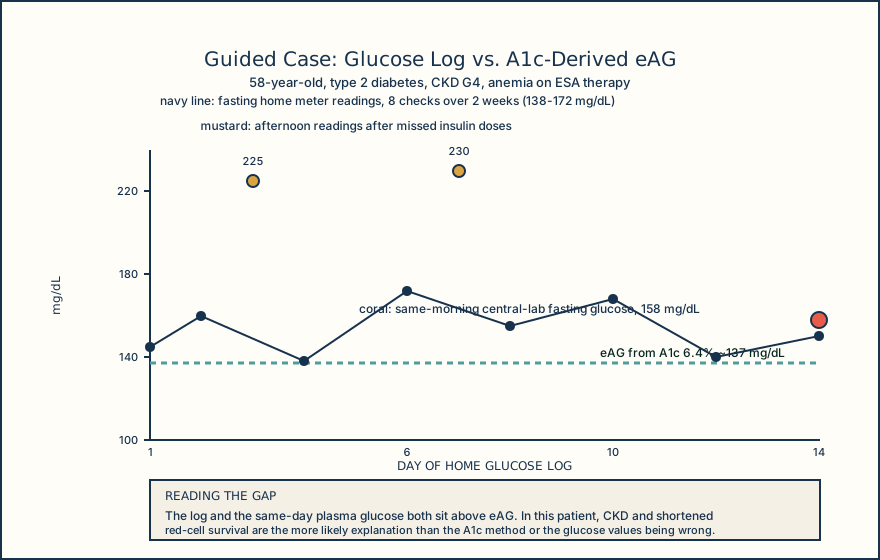
Return to the patient from the opening problem. Home fasting glucose log over the prior two weeks: 145, 160, 138, 172, 155, 168, 140, 150 mg/dL, a range of 138 to 172 mg/dL by the patient's own calibrated meter, plus two afternoon readings over 220 mg/dL after missed insulin doses. Central-laboratory fasting plasma glucose, drawn the same morning as the A1c: 158 mg/dL, no flag. A1c by ion-exchange HPLC, NGSP-certified: 6.4%. eAG from that A1c: 28.7 times 6.4 minus 46.7, approximately 137 mg/dL.
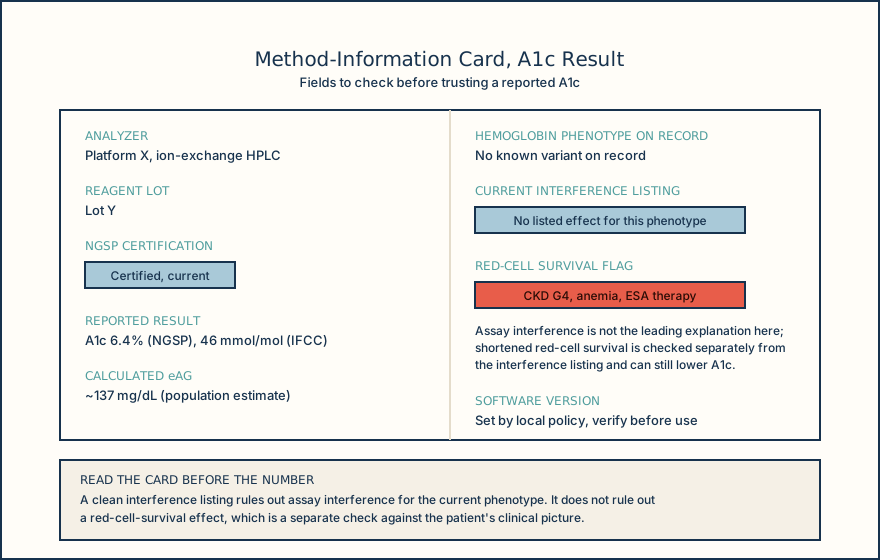
Work the reasoning in order. First, check the interference listing: this patient has no hemoglobin variant on record, and the analyzer's current listing shows no effect for that phenotype, so assay interference is not the leading explanation. Second, look at the clinical picture: CKD stage G4, anemia (hemoglobin 9.6 g/dL), and ESA therapy are exactly the combination that KDIGO and NGSP both associate with a falsely low A1c from altered red-cell survival and turnover. Third, put the numbers on the same timeline: the two-week home log mean of roughly 153 mg/dL sits closer to a fructosamine-type window than to the A1c's two-to-three-month window, and both the log and the same-day central-lab glucose run noticeably higher than the eAG.
The sparse, fasting-weighted glucose record supports, but does not prove, that altered red-cell survival may be making this A1c underestimate average glycemia; it does not establish the cause or prove that the glucose data are correct. That distinction matters for what happens next: it points toward a different test, not toward dismissing either result as an error.
Fourth, identify the next informative check. Fructosamine or glycated albumin, or continued CGM/structured self-monitored-glucose review, are the reasonable next steps here because all three are largely independent of red-cell lifespan. Fifth, draft a bounded interpretive note: state that the A1c and the glucose data disagree, that the pattern is consistent with a red-cell-survival effect given the patient's CKD, anemia, and ESA therapy, and that a fructosamine, glycated albumin, or CGM review is suggested as the next check. The note stops there. It does not recommend an insulin dose or any other treatment change; that decision belongs to the ordering clinician and to local policy.
When the interference listing is clean, look at red-cell survival before you look anywhere else, and let the next test, not a guess, settle the question.
Illustrative drawing — this picture was drawn rather than captured.
Illustrative drawing — this picture was drawn rather than captured.
| Data source | Value | Timing | Note |
|---|---|---|---|
| Home meter fasting log | 138-172 mg/dL, mean ~153 mg/dL | prior 2 weeks | 8 fasting checks; patient's own calibrated meter |
| Home meter afternoon excursions | >220 mg/dL, two occasions | prior 2 weeks | after missed insulin doses |
| Central-lab fasting glucose | 158 mg/dL | same morning as A1c | no flag |
| A1c | 6.4% (NGSP), 46 mmol/mol (IFCC) | same morning | ion-exchange HPLC, NGSP-certified, no listed interference for this phenotype |
| Calculated eAG | ~137 mg/dL | derived from A1c | population regression, not a direct measurement |
Knowledge checks
This section has no knowledge checks.
Section status
Finish this section
Reading and checks are open. Sign in only to save.
The module finishes after every required section is marked done and every check in those sections is correct.