Required section · Section 5 of 6
Choose the defensible disposition
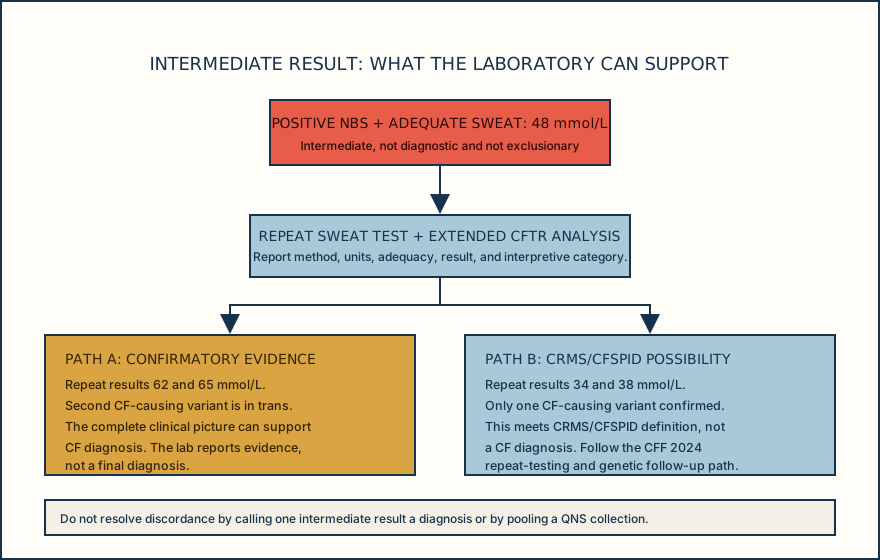
Use the first collection to separate an analyzable result from a QNS specimen. The 48 mmol/L right-arm result is intermediate and needs repeat sweat testing. The 9-microliter left-arm specimen has no chloride result because it did not meet the collection minimum. The correct first laboratory action is to report both dispositions accurately and support repeat evaluation.
Now consider the contrast branch. If repeat adequate sweat chlorides are 34 and 38 mmol/L and only one CF-causing variant is confirmed, the pattern meets the CRMS or CFSPID definition rather than confirming CF. CFF 2024 guidance includes repeat sweat testing at 6 months and then at least annually to age 8, with genetic follow-up such as phasing and sequencing as indicated. A variant classification alone does not supply a diagnosis.
Two variants matter differently when they are in trans, on opposite chromosome copies, than when they are in cis. Phasing can require parental or other family testing; the laboratory reports the observed evidence and routes intermediate or discordant results through the established CF-center and genetic follow-up pathway.
Illustrative drawing — this picture was drawn rather than captured.
Ordering exercise
Place the laboratory actions in the defensible order after the day-24 collections.
1. Support repeat sweat testing and extended CFTR evaluation
An intermediate result does not establish or exclude CF.
2. Release the adequate 48 mmol/L result with its category
Report method, units, adequacy, and intermediate interpretation.
3. Check each collection against the validated minimum
Confirm volume or weight separately for each body-site collection.
4. Report the 9-microliter collection as QNS
Do not analyze or pool the below-minimum left-arm specimen.
Knowledge checks
Reading and checks are open. Sign in only to save.
Knowledge check 1
Section status
Finish this section
Reading and checks are open. Sign in only to save.
The module finishes after every required section is marked done and every check in those sections is correct.