Required section · Section 1 of 6
A positive screen is not a diagnosis
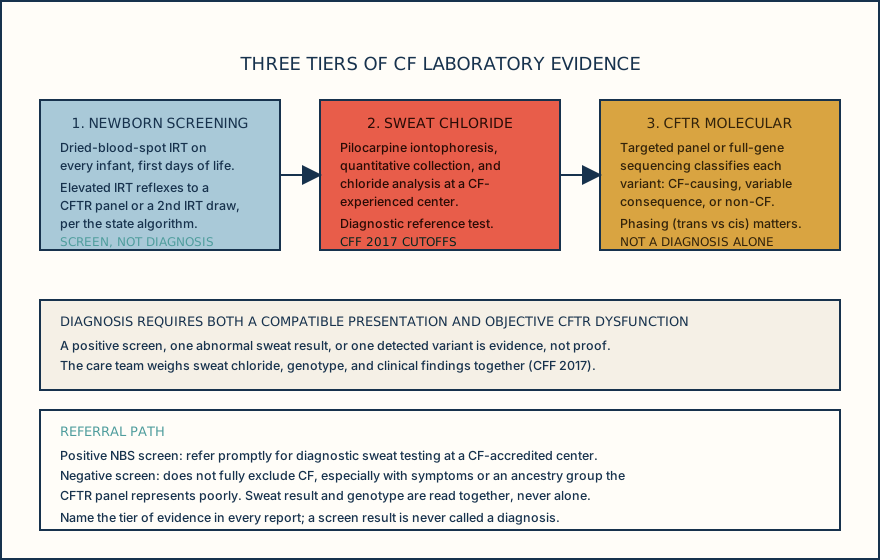
A newborn-screening referral arrives with immunoreactive trypsinogen, or IRT, above the state floating cutoff and one detected CFTR variant. The result is important, but it is not a cystic fibrosis diagnosis. IRT can be elevated with prematurity, perinatal stress, and assay or seasonal variation. The bench question is how each subsequent laboratory result adds evidence without overstating what it means.
Every United States newborn-screening program starts with IRT measured from the first dried-blood-spot specimen. Jurisdictions then use an IRT/DNA, IRT/IRT/DNA, or IRT/DNA/sequencing pathway and choose their own cutoff and panel. A limited panel can miss a disease-causing variant, and one detected variant most often indicates carrier status. A negative screen also does not fully exclude CF when symptoms are compelling or panel representation is limited.
A prompt referral after a positive screen is for quantitative sweat chloride testing at a CF-experienced center. The laboratory separates a screen, a diagnostic test, and molecular evidence in its report and communication, calling the NBS result screening evidence and stating the jurisdictional algorithm before anyone treats it as diagnostic.
Illustrative drawing — this picture was drawn rather than captured.
Knowledge checks
Reading and checks are open. Sign in only to save.
Knowledge check 1
Section status
Finish this section
Reading and checks are open. Sign in only to save.
The module finishes after every required section is marked done and every check in those sections is correct.