Required section · Section 1 of 6
Opening laboratory problem
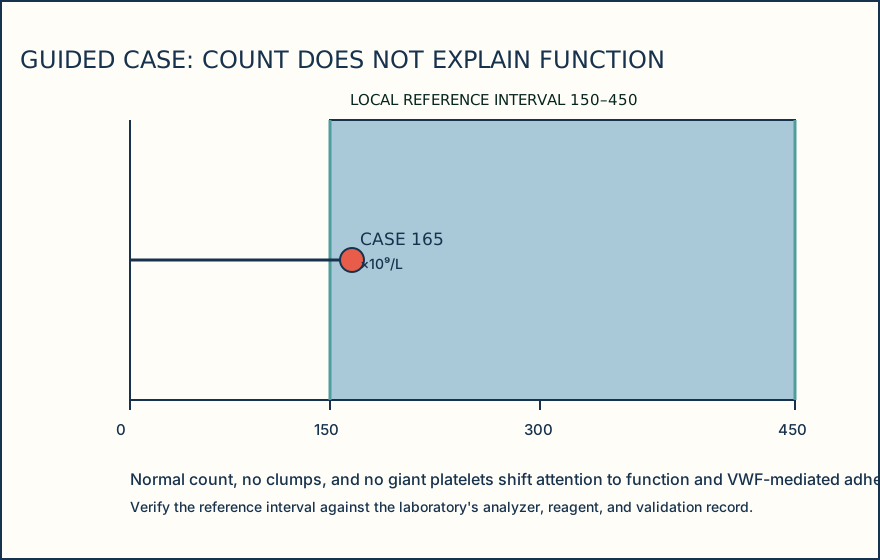
An adult scheduled for dental extraction reports frequent bruising and heavy menstrual periods, without joint or muscle bleeding. The automated EDTA platelet count is 165 ×10⁹/L, within this laboratory's locally established 150–450 ×10⁹/L interval, and there is no analyzer flag. A peripheral smear review finds no clumps, satellitism, or giant platelets. The question here is not whether the count is low, but what must happen for a platelet plug to form and where this result set could fail.
Mucocutaneous bleeding is a clinical correlation, not a diagnosis. It can fit a primary-hemostasis problem, but it does not establish a platelet disorder or von Willebrand disease. The platelet count measures the number of events classified as platelets by the analyzer; it does not establish adhesion, secretion, or aggregation. A normal count therefore keeps a qualitative platelet or von Willebrand factor, abbreviated VWF, problem in the differential.
Start with the observable result, then verify its plausibility before assigning meaning. In this case, count and smear make EDTA-associated clumping and giant-platelet interference less likely. The next useful evidence is a method-appropriate function study, not a symptom-based label. Release a platelet count only after the analyzer result and smear evidence agree when review is indicated.
Illustrative drawing — this picture was drawn rather than captured.
| Observation | Result | Interpretation boundary |
|---|---|---|
| Automated platelet count | 165 ×10⁹/L | Within the locally established 150–450 interval; count does not measure function. |
| MPV | 10.2 fL | Context only; interval is locally established. |
| Peripheral smear | No clumps, satellitism, or giant platelets | Supports count plausibility; it is not the reference enumeration method. |
Knowledge checks
Reading and checks are open. Sign in only to save.
Knowledge check 1
Section status
Finish this section
Reading and checks are open. Sign in only to save.
The module finishes after every required section is marked done and every check in those sections is correct.