Required section · Section 4 of 6
Working the normal-screen case
Return to the opening case: platelet count 248 x10^9/L, PT 11.8 s, aPTT 31.2 s, and Clauss fibrinogen 286 mg/dL, all inside their stated reference intervals, with no analyzer flags. The citrate tube was full and unclotted, drawn by peripheral venipuncture at 09:10, and tested at 10:05, so specimen quality and timing are not an explanation for the results. There is no anticoagulant exposure. Ibuprofen use during menses is reported and belongs in the record, since nonsteroidal anti-inflammatory drugs can cause platelet dysfunction that a platelet count cannot detect.
Step through the process map from the mental-model section. Specimen and drug review comes first: the tube is acceptable and there is no anticoagulant on board, so those look-alikes are set aside; the ibuprofen use is noted as a possible contributor to platelet dysfunction but does not by itself explain three sites of mucocutaneous bleeding. History: mucocutaneous bleeding at more than one site, provoked and spontaneous, fits a primary-hemostasis pattern more than a deep-tissue pattern. Pattern classification: every screening value is normal, so this is the normal-screen pattern, not evidence that hemostasis is normal.
The normal platelet count argues against thrombocytopenia but says nothing about platelet function. The normal PT and aPTT do not exclude VWD, and a normal fibrinogen does not test for factor XIII deficiency, which acts after fibrin has already formed. Given the exclusions, history, and confirmed normal-screen pattern, the preferred next laboratory action is to obtain or refer for VWF antigen, platelet-dependent VWF activity, and factor VIII coagulant activity, the standard initial specific work-up for suspected VWD. If those studies are unrevealing and the bleeding history remains persuasive, platelet function testing or factor XIII activity may be appropriate next, through the laboratory's approved referral pathway.
The chart below plots each of the four screening values against its reference interval band; all four sit inside the band, and VWF and factor VIII activity are shown as the pending test that will actually move this case forward.
After you verify the specimen and anticoagulant exposure, use a credible bleeding history to choose the next test and let the screen tell you only what it can and cannot see.
Illustrative drawing — this picture was drawn rather than captured.
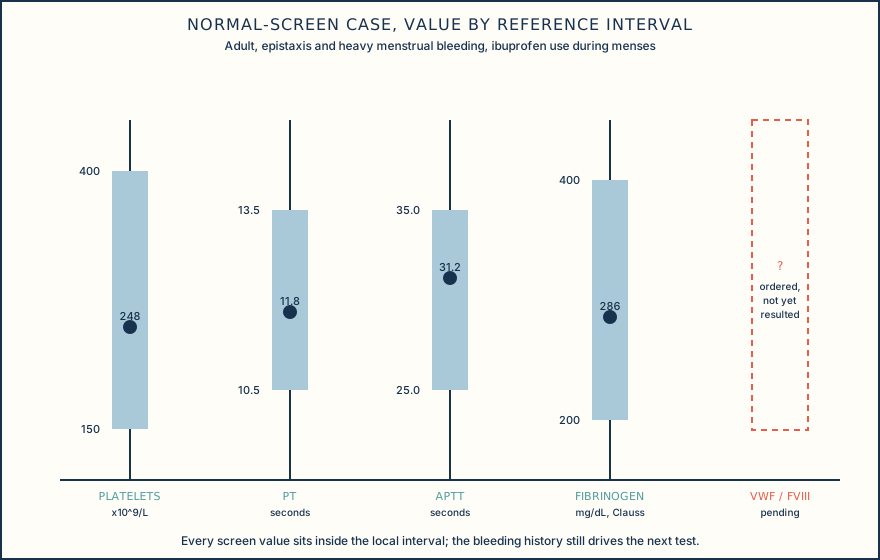
| Analyte | Result | Reference interval | Reads as |
|---|---|---|---|
| Platelet count | 248 x10^9/L | 150-400 x10^9/L | Normal; does not assess platelet function |
| PT | 11.8 s | 10.5-13.5 s | Normal; does not exclude VWD |
| aPTT | 31.2 s | 25.0-35.0 s | Normal; does not exclude mild hemophilia or VWD |
| Fibrinogen (Clauss) | 286 mg/dL | 200-400 mg/dL | Normal; does not test factor XIII |
Knowledge checks
Reading and checks are open. Sign in only to save.
Knowledge check 1
Section status
Finish this section
Reading and checks are open. Sign in only to save.
The module finishes after every required section is marked done and every check in those sections is correct.