Required section · Section 3 of 6
Site, safety, and tube order
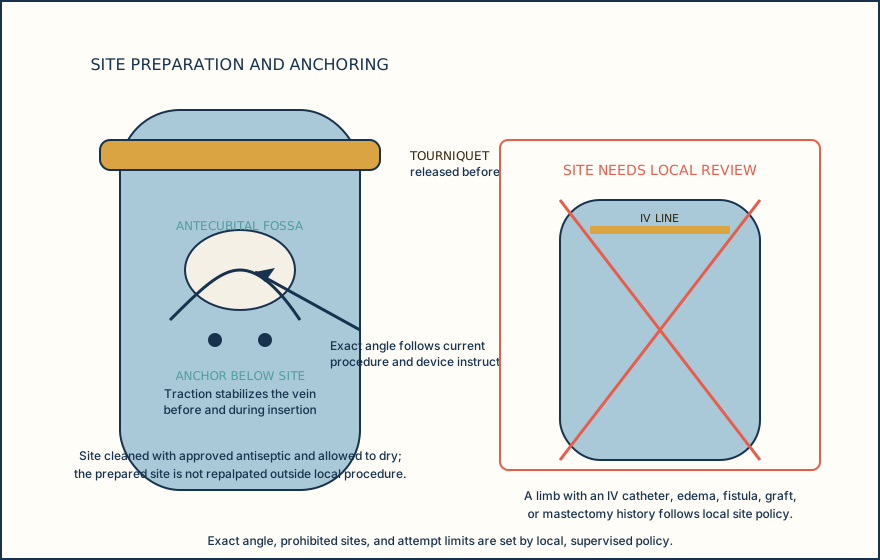
Site selection follows the test and the patient. An antecubital site is generally preferred when feasible; the reviewed evidence associates non-antecubital collection and collection through an existing intravenous (IV) catheter with higher rates of hemolysis, the rupture of red cells that can compromise specimen quality. Vein anchoring, meaning stabilizing the vein with traction below the intended puncture point, keeps a mobile vein from rolling away from the needle. Exact needle angle, the list of prohibited or restricted sites such as an affected limb after mastectomy, a fistula, a graft, edema, or an active IV line, and the maximum number of attempts are procedure- and patient-specific, set by local policy and supervised competency rather than a universal number.
Occupational Safety and Health Administration (OSHA) bloodborne pathogens standard requires treating blood and other potentially infectious material under universal precautions, using engineering and work-practice controls first, and adding personal protective equipment where exposure remains. A contaminated needle is never bent, broken, removed, or recapped except under OSHA's narrowly specified conditions, and any permitted recapping requires a mechanical device or a one-handed technique. The safety feature on the collection device is activated according to its instructions for use, and the sharp is discarded immediately or as soon as feasible into a container that is closable, puncture resistant, leakproof on the sides and bottom, labeled or color-coded, kept upright, and never overfilled.
Tourniquet time matters for specimen quality, not just patient comfort. Keeping the tourniquet on for more than about one minute is associated with more in-vitro hemolysis in a synthesis of the published evidence, so the practical target is to release it before that point when feasible; this is a collection-quality target, not a patient safety limit with a hard cutoff, and the approved procedure and the patient's condition still govern the real draw. Repeated fist pumping is avoided because it can alter measured analytes; any brief fist use follows the local collection procedure rather than habit.
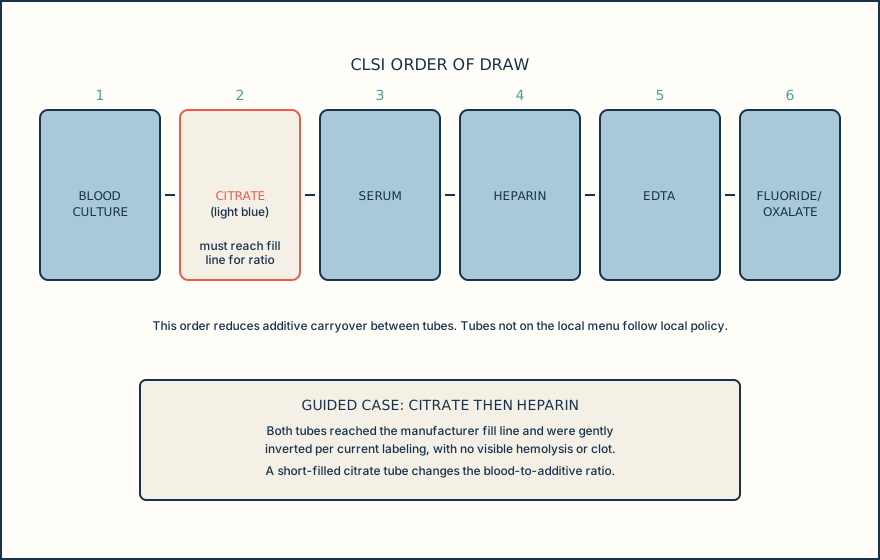
Tube order matters because additive carryover between tubes can affect results drawn afterward. Drawing blood cultures first protects the culture specimen from additive carryover. The CLSI order of draw for evacuated-tube collection is blood culture, then citrate (light-blue top), then serum, then heparin, then ethylenediaminetetraacetic acid (EDTA), then fluoride/oxalate; tubes not on this local menu follow the current procedure. A light-blue citrate tube must reach its intended fill line because the blood-to-citrate anticoagulant ratio matters for coagulation testing. If it is underfilled, follow the current procedure for the test-specific acceptability decision, record the disposition, and recollect if required; appearance or professionalism does not establish acceptability.
Use the shortest reasonable tourniquet time, the correct tube order, and activate the safety device immediately after the needle is fully withdrawn, according to its instructions for use.
Illustrative drawing — this picture was drawn rather than captured.
Illustrative drawing — this picture was drawn rather than captured.
| Order | Tube or additive | Why this position |
|---|---|---|
| 1 | Blood culture | Drawing cultures first protects the culture specimen from additive carryover. |
| 2 | Sodium citrate (light blue) | Early position limits additive carryover into a coagulation-sensitive specimen; fill line is critical |
| 3 | Serum (with or without clot activator) | Follows citrate per the CLSI sequence |
| 4 | Lithium or sodium heparin | Follows serum per the CLSI sequence |
| 5 | EDTA | Anticoagulant carryover from EDTA can affect tubes drawn after it, so it is placed after heparin |
| 6 | Fluoride/oxalate | Drawn last because its additive can interfere with several other analytes if carried forward |
Knowledge checks
Reading and checks are open. Sign in only to save.
Knowledge check 1
Knowledge check 2
Knowledge check 3
Section status
Finish this section
Reading and checks are open. Sign in only to save.
The module finishes after every required section is marked done and every check in those sections is correct.