Required section · Section 4 of 6
Working the case: identity, timing, and fill
Return to the 09:10 case. The collector does not open supplies while the wristband name conflicts with the order. Following the approved local identification pathway, the discrepancy is traced to a recent legal name change; the MRN matches, and the patient's stated date of birth matches the record. Registration corrects the active identifier, the wristband issue is resolved through the approved workflow, and only then does the collector move to site selection. The reasoning holds even though the patient was fully cooperative: a cooperative patient does not substitute for a reconciled identity.
At 09:18 a suitable antecubital vein is selected. The tourniquet goes on, the site is cleaned with the approved antiseptic and allowed to dry without repalpation, and the vein is anchored. The tourniquet is released promptly, well under the one-minute target, once blood flow is established, consistent with the reviewed evidence linking longer tourniquet time to more in-vitro hemolysis. The chart below places this collection's tourniquet duration against that target.
Tubes are collected in order: sodium citrate first, then lithium-heparin. Each tube reaches its manufacturer fill line and is gently inverted per current labeling. This detail is not decorative. A short-filled citrate tube changes the blood-to-additive ratio that the prothrombin time depends on, and vigorous mechanical handling, an underfilled tube, prolonged tourniquet time, or a difficult collection can all contribute to hemolysis. Hemolysis is a specimen condition that can compromise test quality; it is not a diagnosis about the patient, and this case shows neither visible hemolysis nor a clot in either tube.
After the needle is fully withdrawn, the collector activates the safety device, discards the sharp, and labels both tubes in the patient's presence using the reconciled identifiers, the 09:19 collection time, and the collector's identification, then hands the tubes off through the approved transport container. No numerical result, reference interval, or critical value is part of this case, because the teaching point sits entirely in the preexamination phase, before any analyzer sees the specimen.
An identity problem, a timing problem, and a fill problem are three different failure points, and this case shows a collector who caught the first one before it could touch the other two.
Illustrative drawing — this picture was drawn rather than captured.
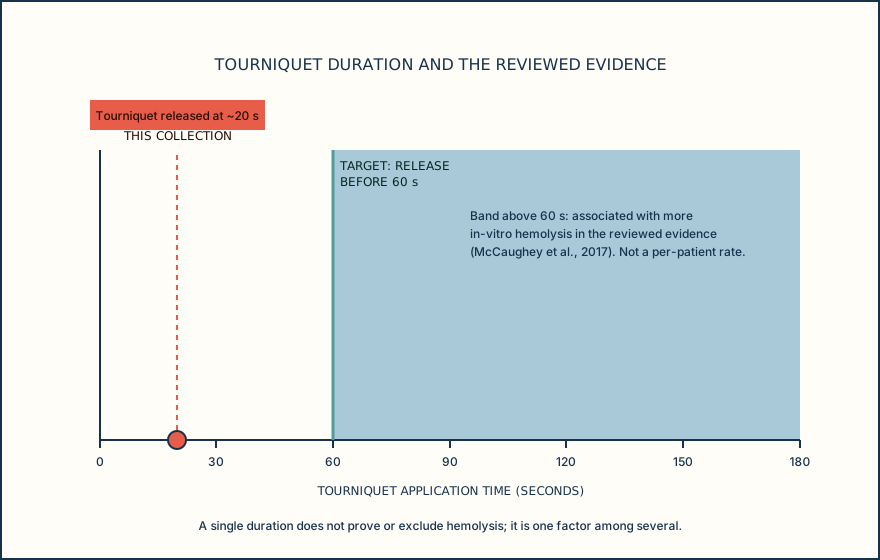
| Tourniquet duration | Association in reviewed evidence | Practical target |
|---|---|---|
| Under 60 seconds | Not the duration range associated with increased in-vitro hemolysis in the reviewed synthesis | Preferred timing when feasible |
| Over 60 seconds | Associated with more in-vitro hemolysis in the reviewed evidence synthesis | Release promptly; if more time is needed, follow local procedure |
Knowledge checks
Reading and checks are open. Sign in only to save.
Knowledge check 1
Knowledge check 2
Section status
Finish this section
Reading and checks are open. Sign in only to save.
The module finishes after every required section is marked done and every check in those sections is correct.