Required section · Section 4 of 6
Working the potassium case end to end
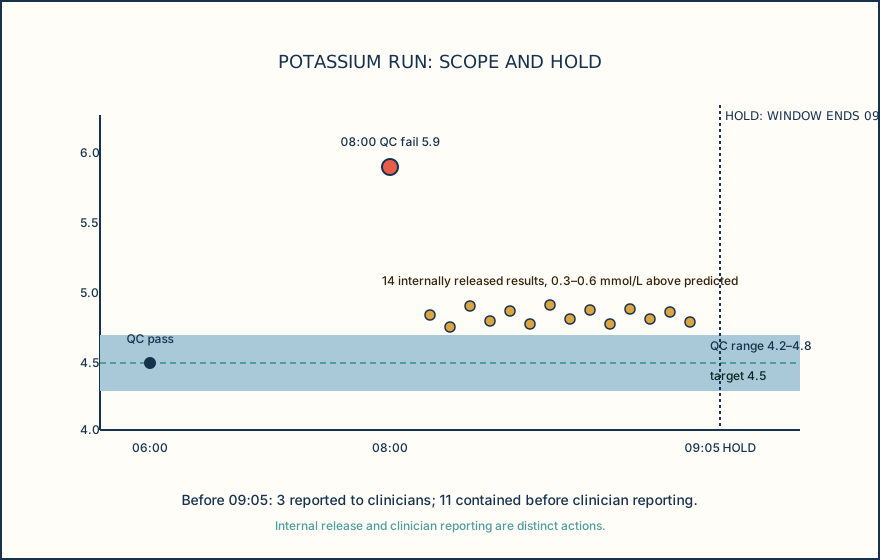
Setting: core chemistry bench, day shift, autoverification enabled for potassium. At 06:00 the level 2 liquid QC result for potassium passed at target. At 08:00 the level 2 result came back at 5.9 mmol/L against a target of 4.5 mmol/L and a 2 SD range of 4.2 to 4.8 mmol/L, a clear QC failure. The failure was overridden and patient testing resumed without an investigation.
Detection: between 08:00 and the 09:05 hold, a technologist reviewing the autoverification queue identifies 14 internally released potassium results that run 0.3 to 0.6 mmol/L higher than delta-check history would predict.
Containment: at 09:05, stop further internal release and clinician reporting on that analyzer, preserve evidence, and notify the shift supervisor. This is immediate correction, not yet corrective action.
Scope: 14 results were internally released in the affected window. Three were reported to ordering clinicians before the hold; the other 11 were contained before clinician reporting.
Risk triage: no adverse patient outcome is known at this point, and the event does not meet the sentinel-event threshold of death, permanent harm, or severe temporary harm. It is triaged as a nonconforming event with moderate potential harm, since a falsely elevated potassium could prompt unnecessary treatment, and a defined, bounded scope of 14 specimens with 3 already reported. That combination warrants an investigation scaled to the risk, not a full root cause analysis.
Correction and closure: promptly notify ordering clinicians and issue corrected reports for the 3 externally reported results once repeat testing on a verified system confirms accurate values. Correct the 11 contained results before clinician reporting. Investigation then determines whether a recurrence condition exists: assign and monitor systemic corrective action if it does; if no systemic cause is found, document the evidence and why no systemic corrective action is assigned.
Scope the event by time window and by what already left the building, not by how many results still sit in the queue; the 3 already-reported results are the ones that need a clinician notified and a corrected report issued.
Illustrative drawing — this picture was drawn rather than captured.
| Time | Event | Potassium value | Disposition |
|---|---|---|---|
| 06:00 | Level 2 QC | 4.5 mmol/L (in range) | Passed, testing continues |
| 07:45 | Reagent lot change | not applicable | New lot in use, no verification run before release |
| 08:00 | Level 2 QC | 5.9 mmol/L (range 4.2-4.8) | Failed, overridden, not investigated |
| 08:00-09:05 | 14 patient specimens | 0.3-0.6 mmol/L above predicted | Released before hold; 3 already reported to clinicians |
| 09:05 | Run held | not applicable | Further potassium reporting stopped on this analyzer |
Knowledge checks
Reading and checks are open. Sign in only to save.
Knowledge check 1
Section status
Finish this section
Reading and checks are open. Sign in only to save.
The module finishes after every required section is marked done and every check in those sections is correct.