Required section · Section 2 of 6
One hierarchy, one lifecycle
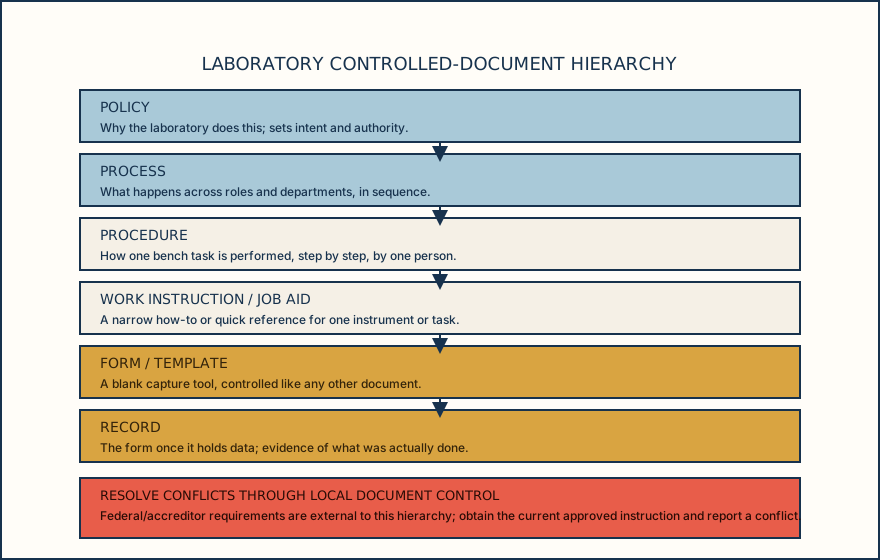
Federal and accreditor requirements set applicable obligations. The laboratory’s controlled-document hierarchy—policy, process, procedure, work instruction/job aid, form/template, and record—is its own managed structure. A procedure does not automatically outrank every job aid unless current local document control establishes that relationship.
A form or template is a blank capture tool, itself a controlled document. Once that form holds data, it is no longer a template; it is a record, evidence of what was actually done, and it is retained rather than edited.
CLSI QMS02, the consensus standard for developing and managing laboratory documents, frames a document-management program around this same idea: creating, reviewing, approving, maintaining, assessing, changing, and retiring documents, for both paper-based and electronic systems, across every level of the hierarchy from policy through form.
Every controlled document also moves through a lifecycle. Someone recognizes a need for a new or revised document. It is drafted, technically reviewed, and approved by the person with the authority to approve it. It becomes effective and is issued to the point of use. It stays accessible and current while it is periodically reviewed and, when a trigger occurs, revised. Eventually it is retired and archived. CLSI QMS02 describes this same evidence-based path, from recognition of need through use and control to retirement, for documents of any size or complexity laboratory, including point-of-care testing.
If an obsolete copy appears at point of use, stop using it, obtain the current approved version, and report it for removal, archiving, or other disposition under document control.
Before following an instruction, confirm that it is the current approved version under the laboratory’s document-control system; if it is obsolete, stop use and obtain the current version.
Illustrative drawing — this picture was drawn rather than captured.
Illustrative drawing — this picture was drawn rather than captured.
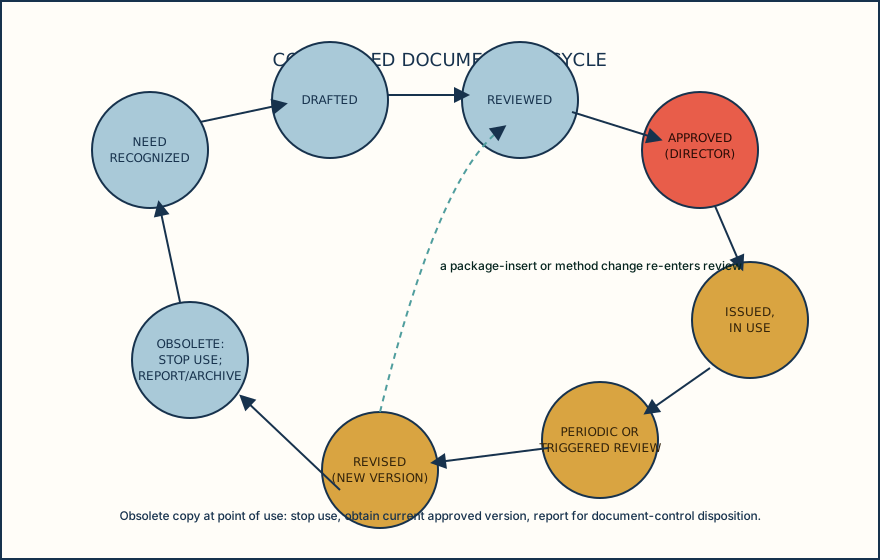
The controlled document lifecycle, from recognizing a need to retiring the document.
Need recognized
A trigger such as a new test, an instrument change, or a manufacturer package-insert revision is identified and logged as a reason to create or revise a document.
Drafted
The document owner writes or revises the content, including any new acceptance criteria or steps the trigger requires.
Reviewed
A technical reviewer, such as a supervisor, checks the draft for accuracy and completeness before it goes to the approver.
Approved by the director
The current laboratory director signs and dates approval. This step cannot be delegated to any other role.
Issued and effective
The document becomes effective on a stated date, is placed at the point of use, and staff are notified before that date.
Periodically or triggered review
The document is checked on the laboratory's own schedule, or sooner if a reagent, instrument, or method change makes it out of date.
Revised
When a review finds the document out of step with current practice, a new version is drafted and re-enters review and approval.
Retired and archived
The superseded version is dated as discontinued, removed from the active point-of-use location, and archived under the retention policy so it cannot be mistaken for current.
Knowledge checks
Reading and checks are open. Sign in only to save.
Knowledge check 1
Knowledge check 2
Section status
Finish this section
Reading and checks are open. Sign in only to save.
The module finishes after every required section is marked done and every check in those sections is correct.