Required section · Section 2 of 6
Keep purposes and evidence levels distinct
Education develops knowledge and skills. Training prepares a person for a task. Formative assessment identifies gaps during learning, while summative assessment supports a decision that a required standard has been reached. Regulatory competency assessment documents performance against required elements, and performance management addresses broader employment expectations.
An assessment blueprint is a table prepared before items are written. It names the objective, content area, cognitive or performance level, assessment format, criticality, and number or relative weight of items. This prevents a low-risk recall topic from crowding out a high-risk action such as critical-value communication or QC failure response.
Miller's framework separates knows and knows how from shows how and does. A written item can sample knowledge or applied reasoning. Direct observation, simulation, or workplace evidence is needed when the claim is that the person performs the work. No single instrument reaches every capability.
At the bench, use a written check to sample reasoning and direct evidence to support a performance claim.
Illustrative drawing — this picture was drawn rather than captured.
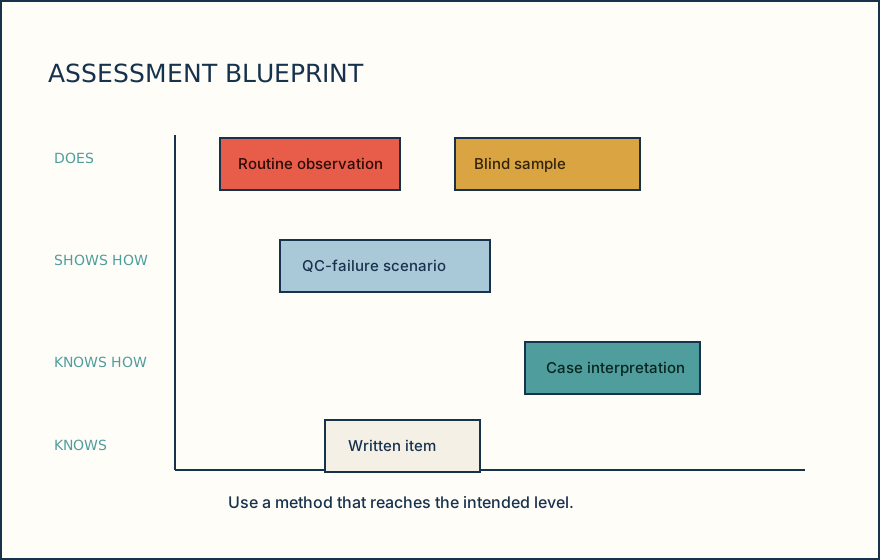
Build the blueprint before drafting assessment items.
Name the capability
State the observable action and the test-system context.
Set criticality
Identify the patient or quality consequence if performance fails.
Select evidence
Choose an assessment method that reaches the claimed level.
Review coverage
Confirm important objectives are represented in proportion to their importance.
Knowledge checks
Reading and checks are open. Sign in only to save.
Knowledge check 1
Knowledge check 2
Section status
Finish this section
Reading and checks are open. Sign in only to save.
The module finishes after every required section is marked done and every check in those sections is correct.