Required section · Section 3 of 6
Focused instruction: patterns and mimics
Relative erythrocytosis reflects reduced plasma volume, while absolute erythrocytosis reflects increased red-cell mass. Secondary erythrocytosis is grouped by hypoxia (for example sleep apnea), exposure or medication (for example carbon monoxide exposure or testosterone), exogenous erythropoietin (EPO), and renal or tumor EPO production. These groups direct evidence gathering before clonality is assumed.
Infection, inflammation, tissue damage, malignancy, iron deficiency, hemolysis, drugs, and hyposplenism can accompany reactive thrombocytosis. A reactive explanation does not exclude a concurrent clonal process when thrombocytosis persists. The smear can confirm apparent thrombocytosis and reveal nonplatelet particles that an analyzer may count as platelets.
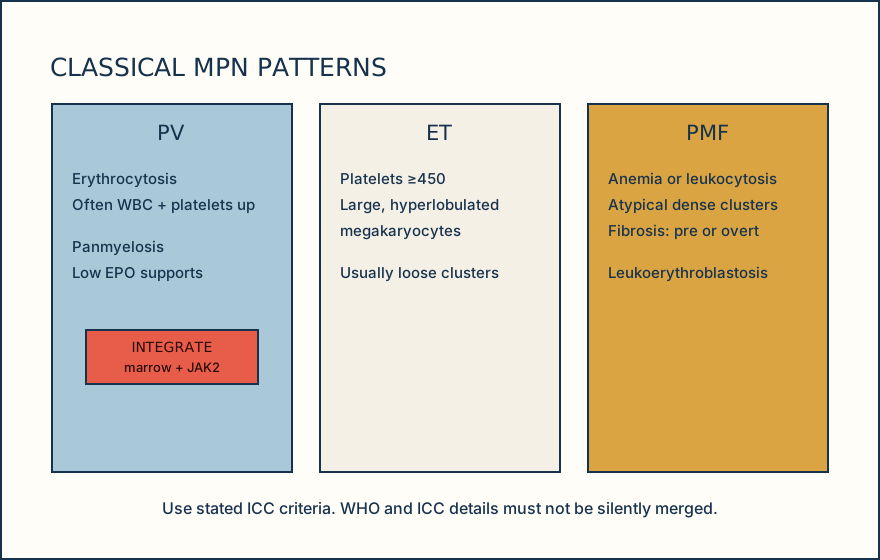
ICC ET uses platelets at least 450 × 10^9/L with characteristic marrow morphology and appropriate exclusion and molecular context. ET marrow has increased large to giant mature megakaryocytes with hyperlobulated nuclei, usually in loose clusters, without significant granulocytic left shift or erythroid proliferation. Preserve the distinction between a platelet count pattern and marrow morphology needed to classify it.
Illustrative drawing — this picture was drawn rather than captured.
Knowledge checks
Reading and checks are open. Sign in only to save.
Knowledge check 1
Section status
Finish this section
Reading and checks are open. Sign in only to save.
The module finishes after every required section is marked done and every check in those sections is correct.