Required section · Section 3 of 6
Interference is a method property, and thresholds do not transfer
CLSI EP07 describes the standard design for measuring interference directly: paired aliquots from the same base specimen pool. One aliquot receives the suspected interferent; the matched control aliquot receives an equal volume of vehicle only, with no interferent added. Keeping the added volume identical between the pair controls for dilution and matrix change, so any difference between the two results is attributable to the interferent itself rather than to unequal dilution. When the specimen must also be diluted to bring the measurand into the method's range, both members of the pair are diluted identically and the same correction is applied to both.
Interference is then calculated as the difference between the interferent-containing result and the matched control result, usually expressed as a percentage: percent interference equals (test result minus control result) divided by the control result, times 100. That number is interpreted against a predefined allowable-interference criterion for that specific analyte on that specific method, not against a generic rule of thumb.
Most chemistry analyzers estimate hemolysis, icterus, and lipemia through a serum index, a semiquantitative measure of free hemoglobin, bilirubin, or turbidity in the specimen. CLSI C56 addresses these hemolysis, icterus, and lipemia (HIL) indices directly and calls for the laboratory to establish and locally verify an assay-specific alert threshold for each index, rather than assuming one universal threshold applies to every test. Published comparisons across different analyzer platforms confirm why that matters: the same specimen hemolysis index can be well tolerated by one analyte and produce an unacceptable bias in another, and thresholds established on one manufacturer's system have repeatedly been shown not to match another manufacturer's system for the same analyte.
That assay-specific behavior is the reason a hemolysis or lipemia flag cannot be read as a single pass or fail signal across an entire panel. A specimen flagged for moderate hemolysis might safely report a sodium or glucose result while an alanine aminotransferase or potassium result on the same specimen needs a second look, because the underlying HIL threshold for each analyte was verified separately against that analyte's own sensitivity to hemolysis.
The reverse is just as important. An unflagged specimen has not been proven free of interference; it has only been shown to fall below whatever HIL threshold the laboratory or manufacturer set for that index. If the threshold for a given analyte was set conservatively, or if the interferent involved is not one the index detects at all, a result can still be biased with no flag present. Absence of a flag is evidence, not proof.
Under 42 CFR 493.1252 and 493.1253, a CLIA-certified laboratory using the unmodified cleared or approved system in this example verifies the manufacturer performance specifications before reporting patient results. A laboratory establishes performance specifications for a modified or non-cleared system. In either case, the laboratory does not borrow another manufacturer's interference threshold or apply a claim its verified system does not support; the specific analyzer, reagent lot, and software version govern the threshold.
Read an HIL flag, or its absence, against the specific analyte's verified threshold on the specific method in use, never against a threshold remembered from a different analyzer or a different analyte.
Illustrative drawing — this picture was drawn rather than captured.
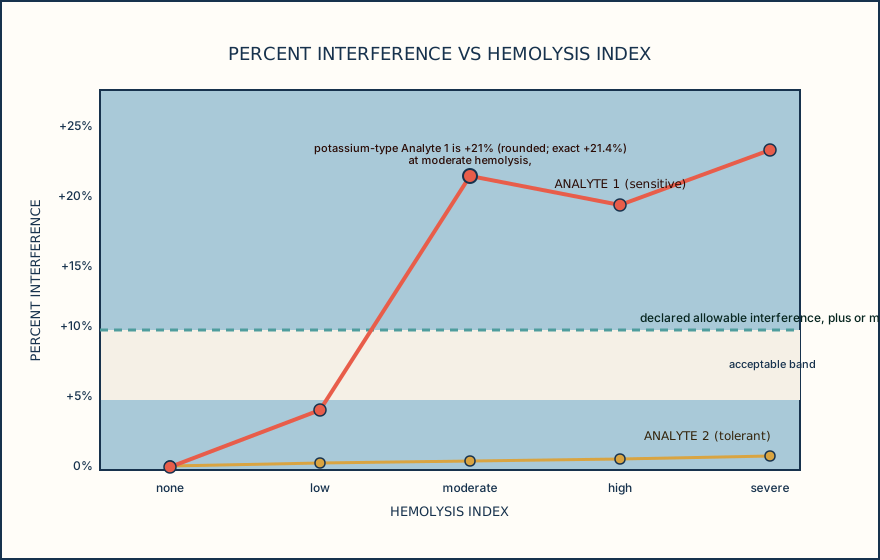
| Analyte | Control result | Hemolyzed result | Percent interference | Declared allowable interference |
|---|---|---|---|---|
| Analyte 1 (hemolysis-sensitive) | 4.2 mmol/L | 5.1 mmol/L | +21% (rounded from +21.4%) | ±10% |
| Analyte 2 (hemolysis-tolerant) | 140 mmol/L | 141 mmol/L | +0.7% | ±10% |
Knowledge checks
Reading and checks are open. Sign in only to save.
Knowledge check 1
Knowledge check 2
Knowledge check 3
Section status
Finish this section
Reading and checks are open. Sign in only to save.
The module finishes after every required section is marked done and every check in those sections is correct.