Required section · Section 4 of 6
Guided example: specimen A, a concordant overt pattern
Outpatient specimen A measured TSH 0.02 mIU/L (reference interval 0.40-4.50 mIU/L), FT4 3.1 ng/dL (reference interval 0.8-1.8 ng/dL), and total T3 285 ng/dL (reference interval 80-200 ng/dL). Walk the reasoning the way it happens at the bench: TSH is suppressed, well below the lower limit. Both FT4 and total T3 are elevated, well above their upper limits. Both hormone measures move in the same direction as the suppressed TSH, so nothing here contradicts anything else.
The chart in the next section returns to the alternate-platform comparison; for specimen A, no such comparison is needed because there is nothing discordant to resolve. No biotin or supplement history was flagged at collection. No recent pregnancy or estrogen therapy is noted. No acute or critical-illness context is present. Every piece of available context is consistent with the number.
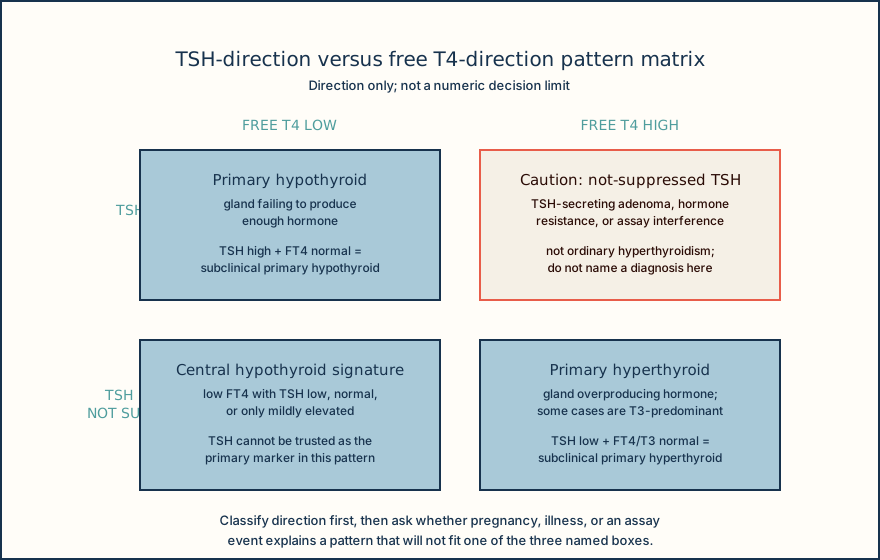
This concordant pattern, suppressed TSH with high FT4 and high total T3, supports overt primary hyperthyroidism using the pattern matrix from the prior section. It does not by itself name a cause. Whether this is Graves disease, a toxic nodule, or thyroiditis requires additional clinical and sometimes imaging information that is outside this result set; the pattern alone does not settle the cause.
A concordant pattern with no confounding history in the chart is the case where a laboratory professional can move fastest, precisely because nothing about it needs to be investigated first.
Illustrative drawing — this picture was drawn rather than captured.
Knowledge checks
This section has no knowledge checks.
Section status
Finish this section
Reading and checks are open. Sign in only to save.
The module finishes after every required section is marked done and every check in those sections is correct.