Required section · Section 2 of 6
Two different ways of counting to three
Metabolic syndrome is not one test with one cutoff. It is a pattern classification built from five laboratory and physical-exam criteria: waist circumference, triglycerides, HDL cholesterol, blood pressure, and fasting glucose. Meeting three of the five, in any combination, supports the classification. The individual analyte results are real measurements; the classification built on top of them is a framework, and frameworks get revised.
The 2001 NCEP ATP III definition set a fixed waist cut point (>102 cm men, >88 cm women) and a fasting-glucose threshold of 110 mg/dL or higher. A 2004 update to that same framework lowered the glucose threshold to 100 mg/dL, without changing the other four criteria. The 2009 harmonized definition, issued jointly by IDF, NHLBI, AHA, and other societies, kept the same five categories and the 3-of-5 rule but removed the single mandatory waist number in favor of population- and ethnicity-specific cut points, and carried the 100 mg/dL glucose threshold forward.
The process map below walks the same evaluation through both versions side by side. The reusable model to take away is simple: five criteria, three needed, but the exact number that defines 'high' on the waist and glucose criteria depends on which version is in use and which population reference applies to that person. A laboratory that reports an interpretive comment without naming the version is asking the reader to guess.
Never write or accept a metabolic-syndrome interpretive comment that does not name its criteria version and, where relevant, its population-specific waist cut point.
Illustrative drawing — this picture was drawn rather than captured.
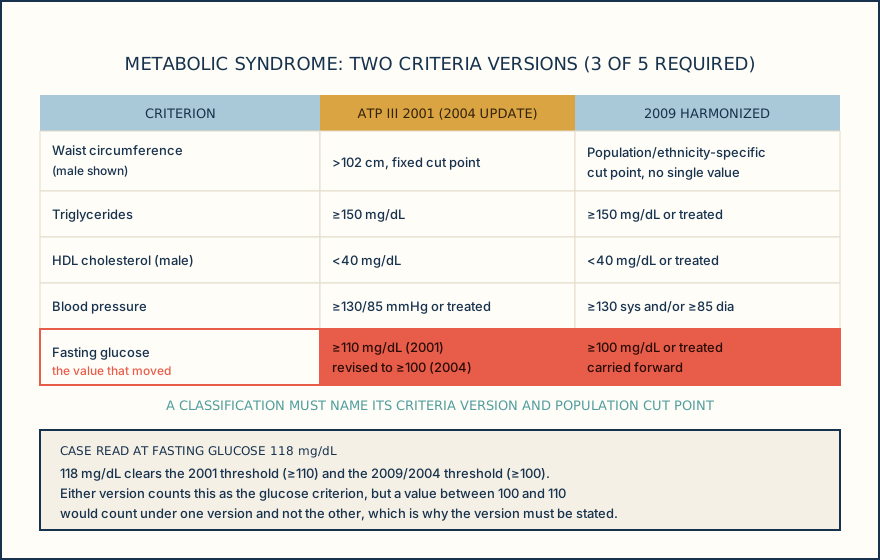
Classifying the same result set under two metabolic-syndrome criteria versions.
Gather five inputs; leave waist unscored if no population cutoff is supplied
Collect waist circumference, fasting triglycerides, HDL cholesterol, blood pressure, and fasting glucose, each with its own reference interval and, for triglycerides and glucose, its own fasting requirement.
Name the criteria version
State explicitly whether the 2001 ATP III, 2004-updated ATP III, or 2009 harmonized definition is being applied, because the glucose threshold and the waist rule differ between them.
Apply the version-specific cut points
Score each of the five criteria against the thresholds that belong to the chosen version, using a population-specific waist cut point under the 2009 harmonized definition rather than a single fixed number.
Count criteria met
A pattern consistent with metabolic syndrome requires 3 of 5 criteria met under whichever version was applied; fewer than 3 does not support the classification regardless of which single values are abnormal.
Document the version used
State the criteria version and any population-specific cut point in the interpretive comment so a later reviewer, or a different laboratory, can reproduce the classification.
Knowledge checks
Reading and checks are open. Sign in only to save.
Knowledge check 1
Knowledge check 2
Section status
Finish this section
Reading and checks are open. Sign in only to save.
The module finishes after every required section is marked done and every check in those sections is correct.