Required section · Section 2 of 6
Use the same worksheet every time
A fixed sequence makes contradictions visible before a label is released. Read pH, inspect PaCO2 and HCO3 directions, name the primary process, check expected compensation, then calculate anion gap and delta. The workflow separates what the method reports from what the pattern may mean.
With acidemia, high PaCO2 supports respiratory acidosis and low HCO3 supports metabolic acidosis. With alkalemia, low PaCO2 supports respiratory alkalosis and high HCO3 supports metabolic alkalosis. The companion value can be compensating, but its direction alone cannot prove adequate compensation.
With potassium excluded, anion gap equals Na − (Cl + HCO3−). Albumin is the largest unmeasured plasma anion, so hypoalbuminemia lowers the measured gap. Write evidence at every worksheet step before stating the pattern.
Illustrative drawing — this picture was drawn rather than captured.
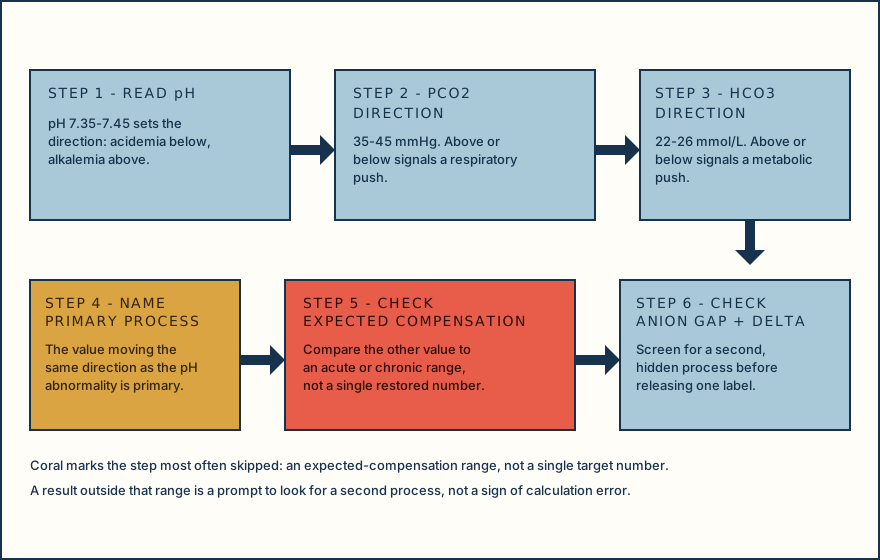
Six-step blood-gas interpretation worksheet.
Read pH
Identify acidemia or alkalemia using the local interval.
Inspect PCO2
Note respiratory direction.
Inspect HCO3
Note metabolic direction.
Name primary
Name the direction explaining pH.
Check compensation
Use timing and an expected range.
Check gap and delta
Screen for a second process.
Knowledge checks
Reading and checks are open. Sign in only to save.
Knowledge check 1
Knowledge check 2
Section status
Finish this section
Reading and checks are open. Sign in only to save.
The module finishes after every required section is marked done and every check in those sections is correct.