Required section · Section 3 of 6
Compensation, gap, and method limits
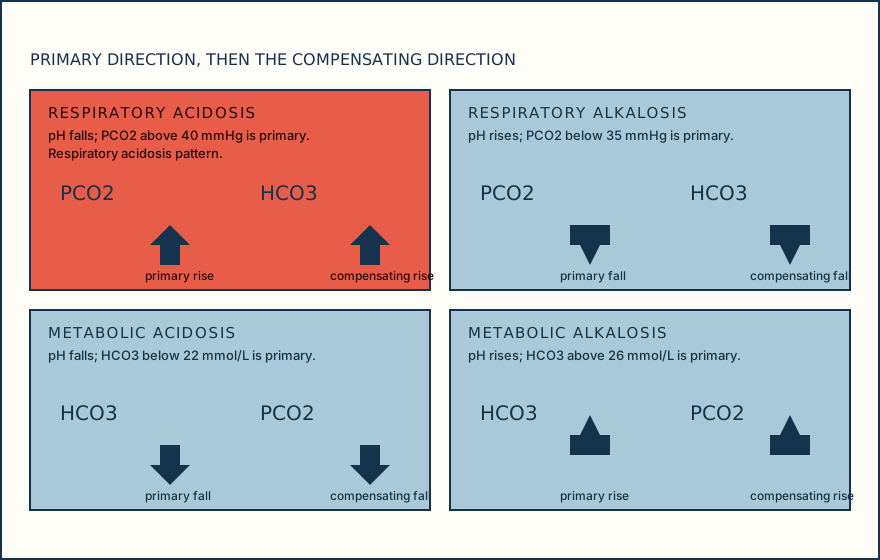
Acute respiratory acidosis raises HCO3 about 1 mEq/L per 10 mmHg PaCO2 rise, while chronic respiratory acidosis raises it roughly 3 to 4 over days. Acute and chronic respiratory alkalosis likewise differ because renal compensation takes days. These are physiologic ranges, not formulas that restore pH to normal.
For metabolic acidosis, Winter's formula estimates expected PaCO2 = 1.5 × HCO3− + 8 ± 2 mmHg. It gives an expected range, not proof of compensation or diagnosis. A value outside the range prompts specimen, method, trend, and clinical review for a second process or evolving timing.
Use the laboratory anion-gap interval rather than the commonly taught 8 to 12 mmol/L interval alone. Published albumin corrections use 2.5 times either 4.0 minus albumin or 4.5 minus albumin, so local policy decides the convention. Declare interval and albumin convention before interpreting the gap.
Illustrative drawing — this picture was drawn rather than captured.
Knowledge checks
Reading and checks are open. Sign in only to save.
Knowledge check 1
Knowledge check 2
Section status
Finish this section
Reading and checks are open. Sign in only to save.
The module finishes after every required section is marked done and every check in those sections is correct.