Required section · Section 1 of 6
A number without a timeline
A vancomycin result of 11.8 µg/mL is available at 17:45, but the trough specimen was collected at 16:45, 15 minutes before dose 6 begins at 17:00. A post-distribution specimen collected at 07:30 after dose 5 measured 22.1 µg/mL. The laboratory question is whether the documented specimen times support a steady-state model, not whether a dose should change.
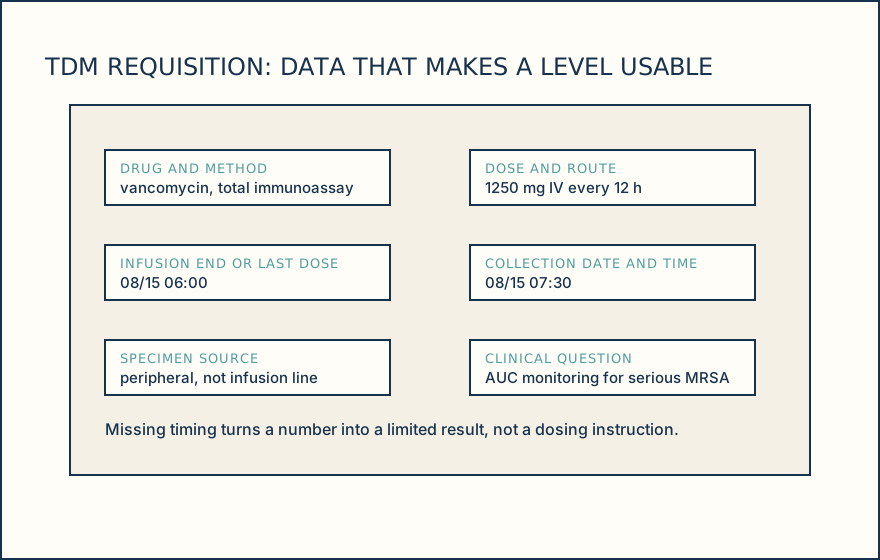
Therapeutic drug monitoring, or TDM, is useful when a drug has a narrow therapeutic index, variable pharmacokinetics, or uncertainty about adherence, toxicity, or efficacy. A concentration only gains meaning when dose, route, exact last-dose time, draw time, specimen type, and clinical question travel with it. The laboratory releases the result and clarifies evidence limits; it does not prescribe a dose.
A level drawn from the line that carried the drug can be falsely elevated from catheter dead space. A level with no timing is a random level and may not fit a target developed for a peak, trough, or area-under-the-curve approach. Record the missing facts before escalating an unexpected result.
Treat a concentration and its collection history as one result.
Illustrative drawing — this picture was drawn rather than captured.
Knowledge checks
Reading and checks are open. Sign in only to save.
Knowledge check 1
Section status
Finish this section
Reading and checks are open. Sign in only to save.
The module finishes after every required section is marked done and every check in those sections is correct.