Required section · Section 1 of 6
A result can be created before analysis
A pediatric clinic calls about a capillary blood lead screen of 14 µg/dL. Before treating the number as a patient finding, the laboratory must decide whether the collection can answer the question and what confirmation is needed. Which specimen, collection materials, and method measure trace-level exposure without creating the exposure in the tube determines what the result can support.
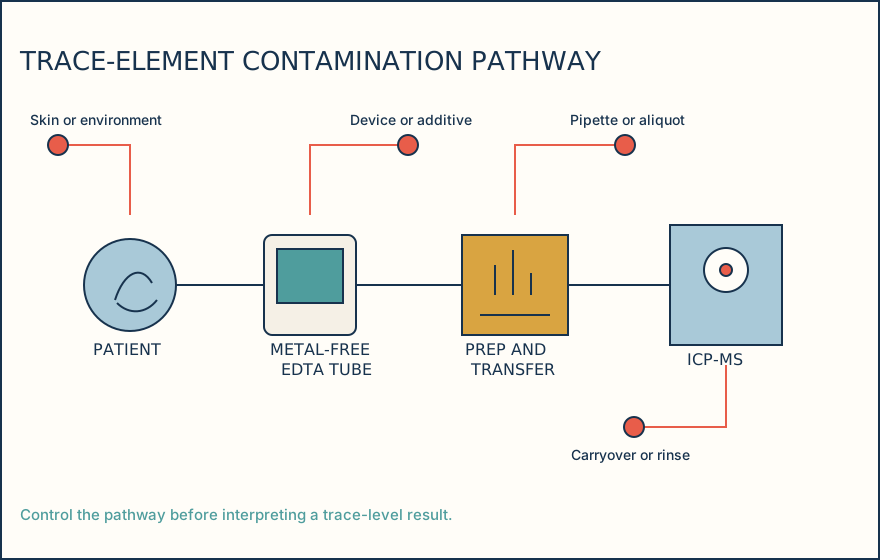
At trace concentrations, contamination can enter from the collection device, stopper, additive, skin, environment, transfer pipette, aliquot tube, transport container, reagents, or analyzer carryover. Greater ICP-MS sensitivity makes a small introduced amount analytically visible. A tube color alone does not establish suitability because additive and metal-free certification matter.
A trace-element-free container is not literally free of every metal. It has background element content verified low enough for the assay detection limit. The result can only be interpreted after the specimen pathway and the requested analyte are known.
Verify matrix, additive, and metal-free status before a trace-level result reaches the analyzer.
Illustrative drawing — this picture was drawn rather than captured.
Knowledge checks
Reading and checks are open. Sign in only to save.
Knowledge check 1
Section status
Finish this section
Reading and checks are open. Sign in only to save.
The module finishes after every required section is marked done and every check in those sections is correct.