Required section · Section 5 of 6
Reconstruct the journey and choose the containment
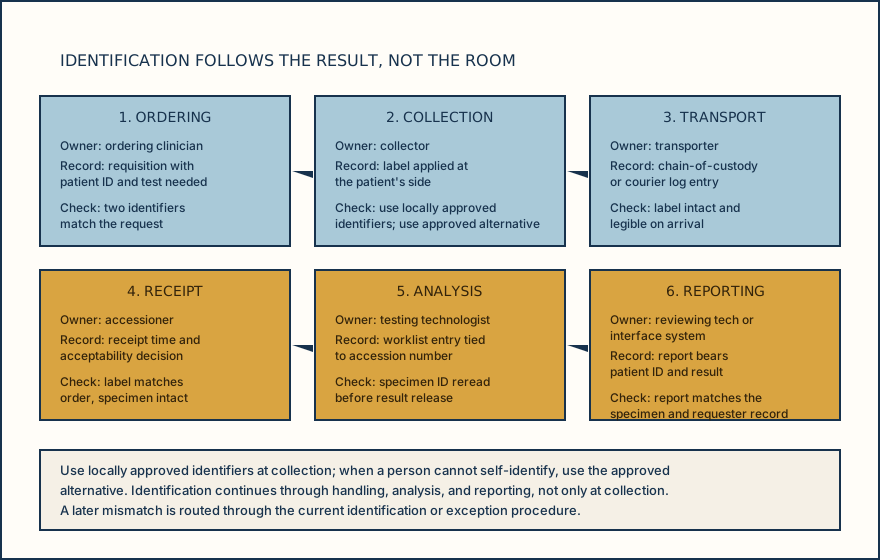
Reconstructing the path of a broken result means putting the handoffs of the total testing process in the order they actually happened for this case, so the earliest failed control can be identified before any later step is blamed instead. The ordering exercise below uses the same case: place the events in sequence, then confirm which one is the earliest point where the specimen's reliability was already in question.
Identifying the earliest failed control is only half of the decision. A technologist also has to choose a defensible next action that fits the evidence: not a guess at what the true potassium might be, and not silence while a critical-range number sits unreviewed. Apply the phase map from the mental-model section to this specific case, and choose the bounded action that matches CLIA's requirements for specimen acceptability, critical-value alerting, and corrected reporting rather than a workaround.
A correct answer here names where in the path the problem first became visible and selects the next action that is supported by the evidence rather than a guess at a systemic fix the case does not support.
Illustrative drawing — this picture was drawn rather than captured.
Ordering exercise
Place these events from the guided case in the order they occurred, from earliest to latest.
1. Delta check reviewed
Technologist finds the prior potassium of 4.1 mmol/L and begins the review prompted by the difference.
2. Result reported
Analyzer reports potassium 6.7 mmol/L with a high hemolysis index flag.
3. Order placed
Basic metabolic panel ordered for the patient.
4. Specimen received
Tube logged in at the laboratory with receipt time documented.
5. Specimen collected
Patient positively identified and serum separator tube drawn and labeled at the bedside.
Knowledge checks
Reading and checks are open. Sign in only to save.
Knowledge check 1
Knowledge check 2
Section status
Finish this section
Reading and checks are open. Sign in only to save.
The module finishes after every required section is marked done and every check in those sections is correct.