Required section · Section 5 of 6
Your call: what fires, what it means, what you do
You are handed the 11:00 run described above: low control 104.4 U/L (+2.2 SD), high control 104.6 U/L (+2.3 SD), under the locally selected rule set (1_2s warning; 1_3s, 2_2s, R_4s, 4_1s, 10x rejection; R_4s within-run only, 2_2s/4_1s/10x carried across runs). A colleague suggests simply rerunning both controls until a pair passes, then releasing the queued patient results. You need to identify which rule actually fires, what error class it points to, and the defensible next step, not the shortcut.
Work through it in order: identify the rules met by this pattern, decide whether the run is rejected or only warned, decide which error class it is most consistent with, then apply the case's decision sequence. The local procedure determines the operational detail and escalation route.
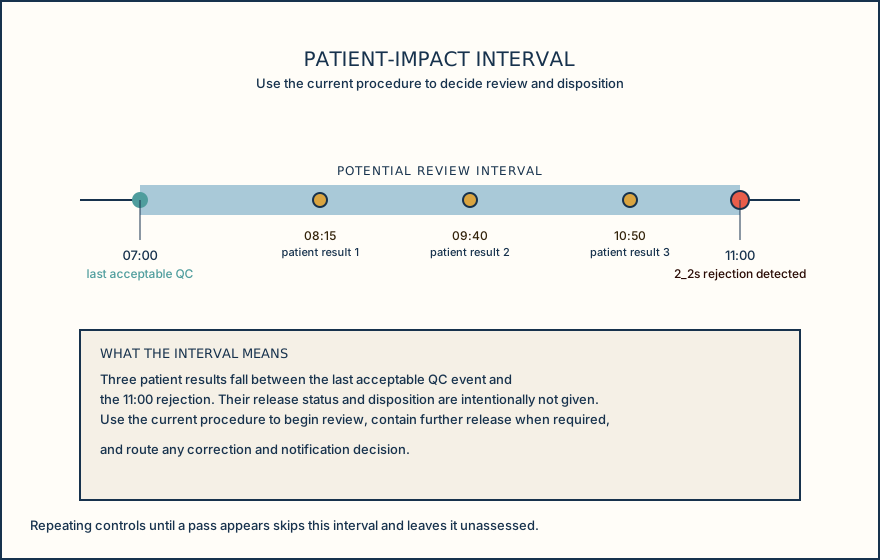
The point of the repeat-until-pass shortcut is that it can look successful: a later control pair might land inside range purely by chance, especially with random noise near a threshold. That apparent success does not investigate or correct anything, and it leaves the interval between the last acceptable QC and the failure completely unreviewed, including any patient results released in it. Documentation would show only passing controls, not the underlying event.
A control run that eventually passes after several reruns without investigation tells you the instrument produced one acceptable number, not that the earlier failure has been explained, corrected, or accounted for.
Illustrative drawing — this picture was drawn rather than captured.
Illustrative drawing — this picture was drawn rather than captured.
Ordering exercise
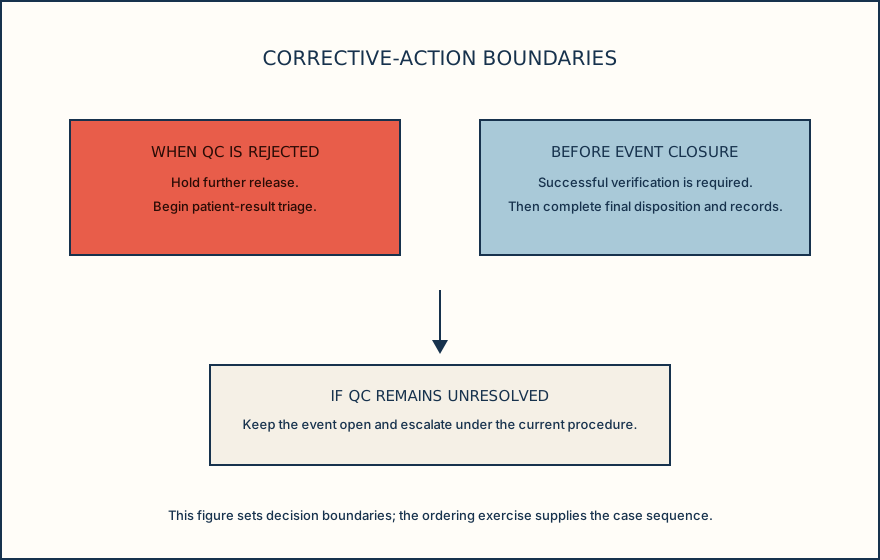
Put the case-specific corrective-action decisions in order. The current procedure controls local detail and escalation.
1. Verify
Verify the correction with required controls; repeated failure triggers escalation.
2. Close and document
After successful verification, complete documentation and closure.
3. Hold further release
Immediately hold further release from the affected interval.
4. Correct
Correct an identified condition; if QC cannot be restored, keep the hold and escalate.
5. Begin patient-result triage
Start review and disposition triage immediately, including already released results under the current lookback route.
6. Assess the event
Confirm the rule pattern and scope the investigation.
7. Investigate
Check likely contributors; escalate if the cause remains unresolved.
Knowledge checks
Reading and checks are open. Sign in only to save.
Knowledge check 1
Knowledge check 2
Section status
Finish this section
Reading and checks are open. Sign in only to save.
The module finishes after every required section is marked done and every check in those sections is correct.