Required section · Section 2 of 6
What an inspection actually samples
An inspection, whether a CMS or state surveyor conducting a CLIA survey or a CAP inspector applying accreditation checklists, is not a once-a-cycle document sweep. CMS interpretive guidance directs surveyors to judge the laboratory mainly through observation of practice, staff interviews, and record review, and to ask whether any departure from written policy created an actual or potential adverse outcome. The operating quality management system (QMS) spans document control, method validation and verification, QC, PT, equipment maintenance, temperature monitoring, reagent management, result reporting, personnel competency, and corrective action, and a surveyor samples across these areas rather than reading one binder end to end.
CAP-accredited laboratories are inspected on-site every two years, with a required self-inspection in the off year using CAP-provided materials. CAP inspectors are trained laboratory professionals and pathologists working from the Laboratory General checklist plus the checklists specific to the sections and tests the laboratory performs. The exact notice window before a scheduled inspection is CAP's current stated policy, tied to its CMS deemed-status agreement, and it has changed over time, so treat it as something to verify locally rather than a fixed number to memorize.
Four terms get used loosely on the bench and mean four different things under CLIA. Training builds the knowledge and skill a person needs before testing begins. Competency assessment is the documented confirmation, after training, that the person follows policy and performs the testing correctly. A performance evaluation rates job-related behaviors and attributes generally and does not satisfy a CLIA competency requirement on its own. Continuing education maintains and updates knowledge over time, and CLSI QMS03 treats it as related to, but separate from, initial training and competence assessment. The laboratory director is ultimately responsible for making sure required competency assessments happen and stay current, no matter who performs or delegates them.
When you picture an inspection, picture a thread being pulled from a written policy through a record to what a person actually did at the bench, not a checklist being read in a conference room.
Illustrative drawing — this picture was drawn rather than captured.
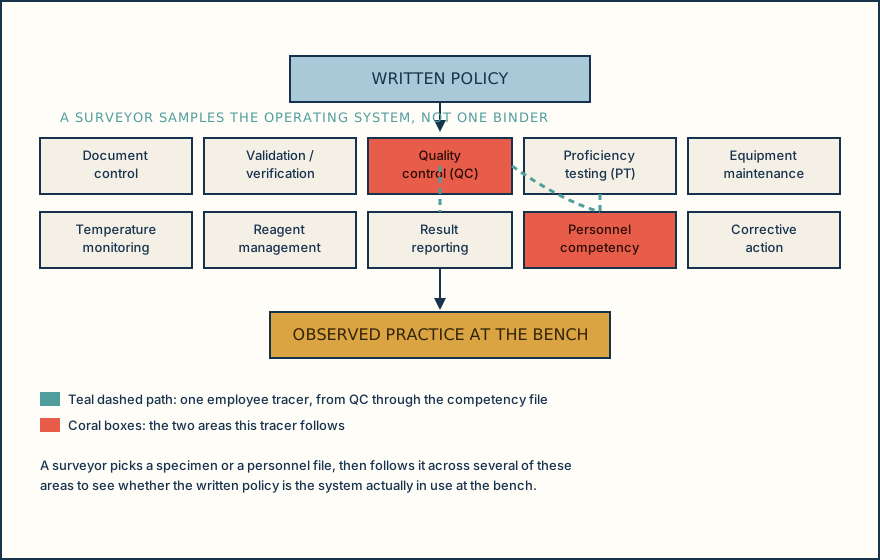
How a tracer moves through the operating quality system
Select a specimen or personnel file
The surveyor or inspector picks one thread to follow, such as one testing person's file for a specific test system.
Compare written policy to practice
The written procedure is read alongside what the record and the bench actually show for that thread.
Sample the linked records
QC, maintenance, temperature, PT, and competency records tied to that thread are pulled and reviewed together.
Interview staff
The person who did the work is asked to describe or demonstrate the step, which tests whether the record matches practice.
Judge actual or potential impact
Any gap between policy and practice is weighed for whether it created, or could create, an adverse outcome for a reported result.
Knowledge checks
Reading and checks are open. Sign in only to save.
Knowledge check 1
Knowledge check 2
Section status
Finish this section
Reading and checks are open. Sign in only to save.
The module finishes after every required section is marked done and every check in those sections is correct.