Required section · Section 3 of 6
Gloves, gowns, eye/face protection, respirators, and sharps
Gloves are required under 1910.1030 whenever hand contact with blood, other potentially infectious materials (OPIM), mucous membranes, or non-intact skin can reasonably be anticipated, or when handling contaminated items or surfaces. OPIM under the rule includes semen, vaginal secretions, cerebrospinal fluid, synovial fluid, pleural fluid, pericardial fluid, peritoneal fluid, amniotic fluid, saliva in dental procedures, any body fluid visibly contaminated with blood, and any fluid where you cannot reasonably tell the type apart. Disposable single-use gloves are replaced as soon as practical when contaminated, torn, punctured, or when barrier function is compromised, and they are never washed or decontaminated for reuse.
Utility gloves are the exception: they may be decontaminated and reused only while glove integrity is intact, and they are discarded the moment they are cracked, peeling, torn, punctured, or otherwise deteriorated. If you are allergic to the gloves your bench normally stocks, your employer must make hypoallergenic gloves, glove liners, or powderless alternatives readily available.
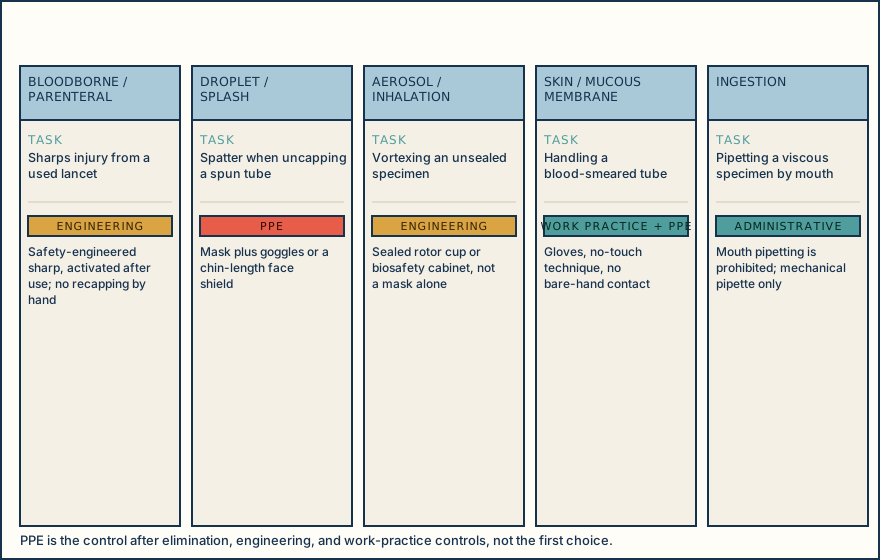
Eye and face protection pairs with a mask, or a chin-length face shield stands in for both, whenever a task may generate splash, spray, spatter, or droplets of blood or OPIM and eye, nose, or mouth contamination is reasonably anticipated. Protective clothing, gowns, aprons, lab coats, or clinic jackets, is required whenever occupational exposure is anticipated; the type depends on the task and the degree of exposure expected. PPE only counts as appropriate under the rule if it keeps blood or OPIM from passing through to your work clothes, street clothes, skin, eyes, mouth, or other mucous membranes under normal use for as long as you wear it.
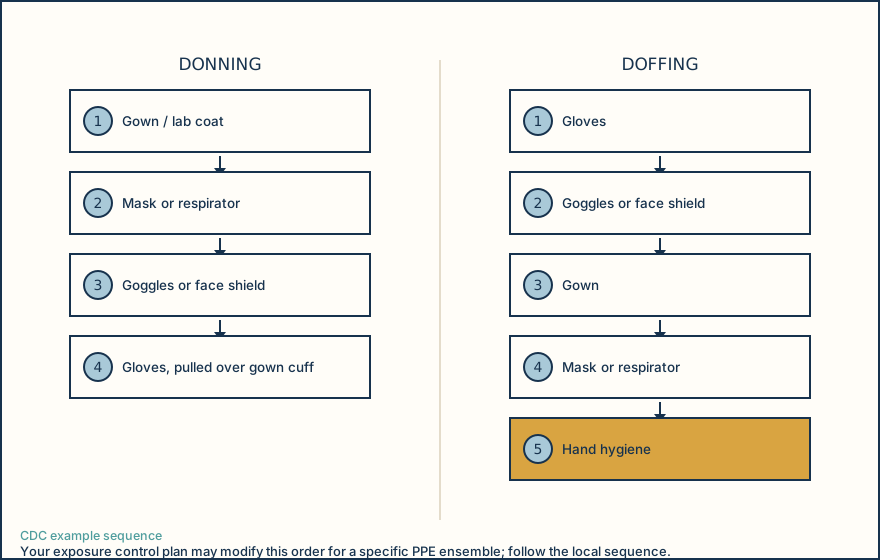
A garment that gets penetrated by blood or OPIM comes off immediately or as soon as feasible, and every piece of PPE comes off before you leave the work area, into a designated container for laundering, decontamination, or disposal. Your employer provides, cleans, launders, repairs, replaces, and disposes of required PPE at no cost to you.
Hand hygiene is not optional after glove removal. CDC's 2002 hand hygiene guideline calls for alcohol-based hand rub for routine decontamination when hands are not visibly soiled, and soap-and-water handwashing when hands are visibly dirty, contaminated with blood or body fluid, before eating, after using the restroom, or when a spore-forming organism such as Bacillus anthracis is suspected, because alcohol does not reliably kill spores. Under 1910.1030 you wash your hands immediately or as soon as feasible after removing gloves or other PPE, and you wash skin or flush mucous membranes immediately after any contact with blood or OPIM.
A respirator is not something you self-select off a shelf. 1910.1030's boundary with 29 CFR 1910.134, the Respiratory Protection standard, requires a documented program before anyone wears a tight-fitting respirator: a hazard evaluation, a medical evaluation by a physician or licensed health care professional using the standard's medical questionnaire, a written recommendation, and fit testing before initial use, whenever the facepiece make, model, or size changes, at least annually, and after any facial change that could affect fit.
Fit testing produces a numeric fit factor of at least 100 for a half-mask respirator and at least 500 for a full facepiece. All of that, the respirator itself, the training, and the medical evaluations, is provided at no cost to you. The program is a prerequisite for use; administering a fit test is a separate, hands-on skill.
Contaminated needles and other sharps are never bent, recapped, or removed by hand. Recapping by hand is permitted only when your employer demonstrates no feasible alternative exists, or a specific medical or dental procedure requires it, and then only with a mechanical device or a one-handed technique; shearing or breaking a contaminated needle is prohibited outright. The Needlestick Safety and Prevention Act of 2000 directed OSHA to strengthen the standard to require evaluation and, where feasible, use of engineering controls such as needleless systems and sharps with engineered sharps injury protections, with annual documented review and input from non-managerial staff who use the devices.
Sharps containers must be closable, puncture-resistant, leakproof on the sides and bottom, labeled or color-coded, easily reached near the point of use, kept upright, and replaced before they overfill. Broken glassware that may be contaminated is never picked up by hand; use a brush and dustpan, tongs, or forceps.
Standard precautions also draw a line around what does not belong at the bench. Eating, drinking, smoking, applying cosmetics or lip balm, and handling contact lenses are prohibited in work areas with a reasonable likelihood of occupational exposure, and food or drink is never stored in a refrigerator, freezer, cabinet, shelf, or benchtop where blood or OPIM are present. Mouth pipetting or mouth suctioning of blood or OPIM is prohibited outright; use a mechanical pipetting device. Pick the PPE for the task in front of you, not out of habit, and confirm the engineering and work-practice controls came first.
Illustrative drawing — this picture was drawn rather than captured.
Illustrative drawing — this picture was drawn rather than captured.
| Glove type | Change or discard trigger | Reuse allowed |
|---|---|---|
| Disposable single-use | Contaminated, torn, punctured, or barrier compromised | Never; discard and replace as soon as practical |
| Utility (reusable) | Cracked, peeling, torn, punctured, or otherwise deteriorated | Yes, by decontamination, only while integrity is intact |
| Hypoallergenic or powderless alternative | Employee allergy to the standard glove | Provided at no cost when needed |
| Hand condition | Action |
|---|---|
| Not visibly soiled | Alcohol-based hand rub for routine decontamination |
| Visibly soiled or contaminated with blood/body fluid | Soap and water |
| Before eating or after using the restroom | Soap and water |
| Spore-forming organism suspected (e.g., Bacillus anthracis) | Soap and water; alcohol does not reliably kill spores |
Knowledge checks
Reading and checks are open. Sign in only to save.
Knowledge check 1
Knowledge check 2
Section status
Finish this section
Reading and checks are open. Sign in only to save.
The module finishes after every required section is marked done and every check in those sections is correct.