Required section · Section 5 of 6
Your turn: choose the bundle, catch the misuse, sequence the response
A new task arrives at your bench: an unsealed microbiology broth culture needs to be vortexed before plating. No spill has happened, and no diagnosis is attached to the specimen. Before you touch it, do the same risk assessment CLSI M29-A4 describes: what is the likely transmission route, is aerosol generation likely, and what does the equipment on your bench allow you to contain versus what a garment or a glove would have to stop on its own. Vortexing an unsealed tube is a textbook aerosol-generating step; a surgical mask at an open bench does not contain an aerosol the way a sealed cup or a biosafety cabinet does.
You will also review a colleague's PPE use on video from a different task and identify what went wrong, because most PPE failures are not a missing item, they are a missing engineering control, a broken sequence, or gloves worn past the point they still function as a barrier. A control bundle chosen correctly on paper still fails if it is donned out of order or if a torn glove is not noticed and replaced.
The immediate response to a blood or OPIM exposure follows the general order the standard requires: stop the task safely, wash or flush the exposed area, report immediately, and follow your facility's exposure control plan for evaluation and documentation. The exact plan, who to call first, and where records are kept are local. Across facilities, the response happens now, not after finishing the batch. An exposure response rehearsed in order is faster than one invented while it is happening.
Illustrative drawing — this picture was drawn rather than captured.
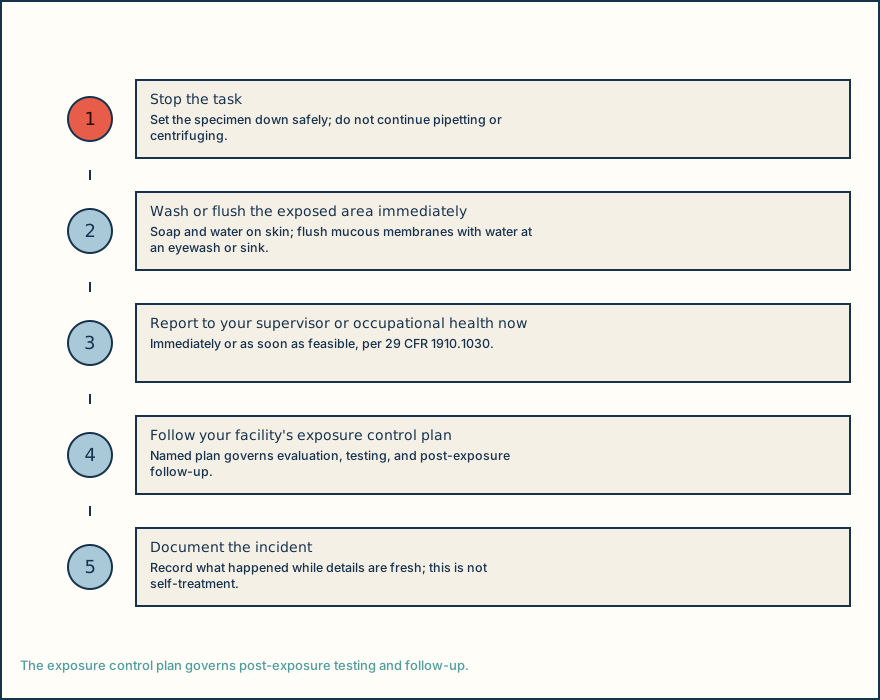
Ordering exercise
You have just had blood contact your forearm through a small tear you did not notice in your glove. Put the immediate response in the correct order.
1. Document the incident
Record what happened while the details are fresh, supporting the evaluation and any later record review.
2. Follow the exposure control plan
Your facility's named plan governs evaluation, testing, and post-exposure follow-up from here.
3. Report to your supervisor or occupational health
Report the exposure immediately or as soon as feasible, per 29 CFR 1910.1030.
4. Wash or flush the exposed area
Soap and water on skin, or flush a mucous membrane with water, immediately or as soon as feasible.
5. Stop the task
Set the specimen down safely so the exposure does not continue or compound.
Knowledge checks
Reading and checks are open. Sign in only to save.
Knowledge check 1
Knowledge check 2
Section status
Finish this section
Reading and checks are open. Sign in only to save.
The module finishes after every required section is marked done and every check in those sections is correct.