Required section · Section 2 of 6
How the classification system sorts material
Every biological material offered for transport sorts into one of a small number of categories, and each category carries its own packaging system. A Division 6.2 infectious substance is material known or reasonably expected to contain a pathogen: bacteria, viruses, parasites, fungi, or prions. That single definition then splits two ways based on severity, and a separate track exists for waste and for refrigerant.
Category A is an infectious substance capable of causing permanent disability or life-threatening or fatal disease in an otherwise healthy human or animal on exposure. Classification into Category A rests on medical history, symptoms, endemic conditions, and professional judgment, not on a diagnosis label by itself. Category A substances affecting humans are assigned UN2814; those affecting animals only are assigned UN2900. Category B is an infectious substance that does not meet the Category A criterion; it is described on the package as "Biological substance, Category B" and assigned UN3373, and it covers most material shipped for diagnostic or investigational purposes, including routine cultures sent for identification.
A specimen tested for a routine, non-infectious-disease purpose, such as glucose, drug or alcohol level, cholesterol, pregnancy, or a non-infectious biopsy, and judged to have low probability of infectivity, is excepted from Division 6.2 requirements entirely. IATA calls this an exempt human specimen, defined the same way: minimal likelihood that pathogens are present, judged from the source's history, symptoms, circumstances, and endemic conditions. An exempt specimen still ships in triple packaging and still carries the words "Exempt human specimen" on the package; exempt does not mean unpackaged.
Regulated medical waste runs on its own numbering. Waste containing a Category A substance is UN3549; waste that does not contain a Category A substance is UN3291, a separate entry from UN2814, UN2900, and UN3373. Dry ice used as a refrigerant sits outside this whole ladder: it is its own dangerous good, UN1845, Class 9, and its packaging requirement (venting, never an airtight seal) is independent of whatever biological material it is cooling.
Settle the classification question before touching a box, because the category, not the box on the shelf, decides which packaging system applies.
Illustrative drawing — this picture was drawn rather than captured.
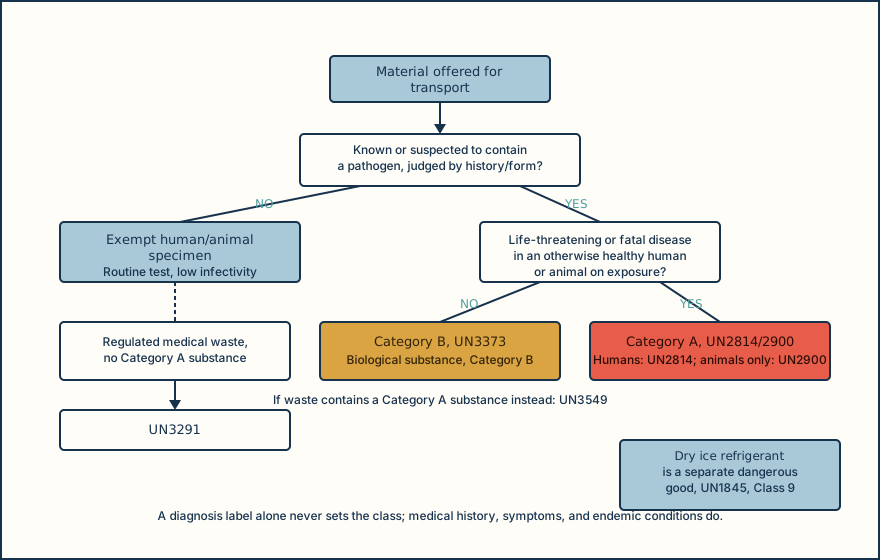
Four-step classification workflow applied to any specimen or culture before packaging begins.
Identify the material and pathogen status
State what the material is (raw specimen, subculture, isolate, tissue, waste) and whether it is known or reasonably expected to contain a pathogen.
Judge severity from history and form
Weigh medical history, symptoms, endemic conditions, and the fact that a culture concentrates and propagates an organism beyond what a raw specimen contains.
Assign the classification
Sort the material into exempt specimen, Category B, Category A, or regulated medical waste using the severity judgment, not a diagnosis label alone.
Confirm UN number and proper shipping name
Record the matching UN number (3373, 2814, 2900, 3291, or 3549) and current proper shipping name, and document the reasoning behind the call.
Knowledge checks
Reading and checks are open. Sign in only to save.
Knowledge check 1
Knowledge check 2
Section status
Finish this section
Reading and checks are open. Sign in only to save.
The module finishes after every required section is marked done and every check in those sections is correct.