Required section · Section 4 of 6
Working the 18:40 huddle end to end
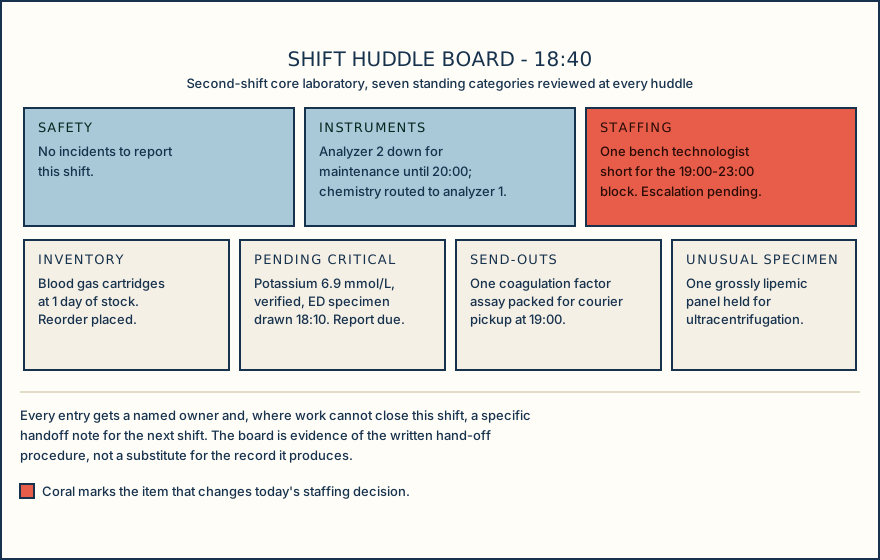
The charge technologist opens the 18:40 huddle with the board: safety has no incidents to report; instruments shows analyzer 2 down for maintenance until 20:00 with chemistry routed to analyzer 1; staffing shows one technologist short for the 19:00-23:00 block; inventory shows blood gas cartridges at one day of stock with a reorder already placed; pending critical work is the potassium of 6.9 mmol/L; send-outs has one coagulation factor assay packed for a 19:00 courier; and unusual specimens has one grossly lipemic panel held for ultracentrifugation. Every entry gets a named owner before the huddle closes.
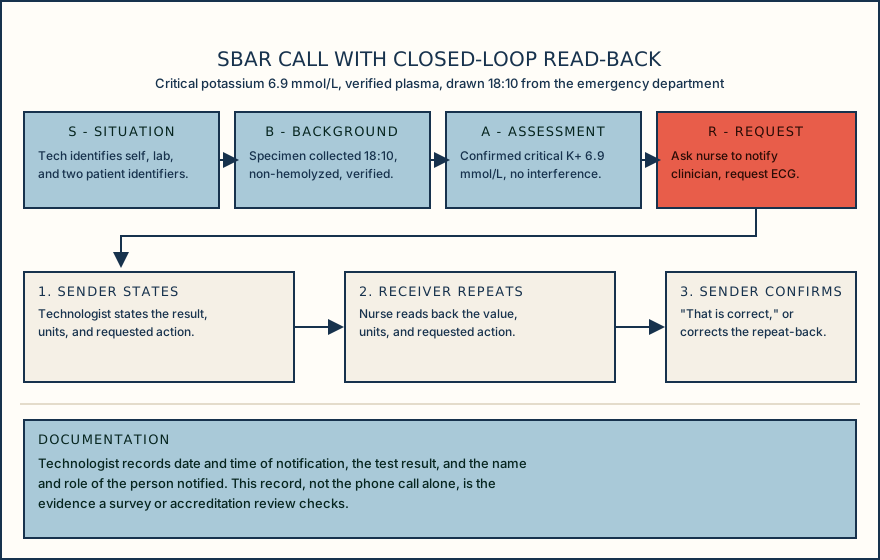
For the potassium, the technologist calls the emergency department and delivers the result using SBAR. Situation: the technologist identifies themselves and the laboratory, and states the two required patient identifiers. Background: the specimen was collected at 18:10 and is non-hemolyzed. Assessment: the potassium is confirmed critical at 6.9 mmol/L, verified, with no interference identified. Recommendation and request: the technologist asks the nurse to notify the responsible clinician and requests an ECG per unit protocol. The receiving nurse then reads back the value, the units, and the requested action; the technologist confirms, "that is correct," and documents the date and time of notification, the result, and the name and role of the person notified. That record, not the phone call alone, is what a compliant critical-value record contains.
For the staffing gap, the charge technologist checks the skill matrix before reassigning anyone. Tech A and Tech D (on-call) are both currently competent and CLIA-qualified for high-complexity chemistry testing; Tech B, on bench, is qualified only at the moderate-complexity level. The charge technologist reassigns the send-out packaging task, which does not require high-complexity qualification, to Tech B, and escalates the high-complexity coverage gap for 19:00-23:00 to the laboratory supervisor with a specific request: extend one technologist's shift, call in the on-call technologist, or, if neither is available, limit routine batch testing until 23:00.
That escalation follows the same shape as AHRQ's CUS tool and assertive-statement process: name the concern, state the specific risk (delayed stat turnaround if the high-complexity bench stays uncovered), and request a specific action rather than describing a vague worry. Nothing in CLIA, CAP, or CLSI QMS01 supports the idea that communication alone fixes unsafe understaffing; the tools here get the risk to the person with the authority to add staff or limit services, which is the director's or supervisor's decision, not the bench technologist's to absorb silently.
A critical-value call and a staffing escalation both end with someone else on record as informed and asked for a specific action, not with the technologist deciding alone and moving on.
Illustrative drawing — this picture was drawn rather than captured.
Illustrative drawing — this picture was drawn rather than captured.
Knowledge checks
Reading and checks are open. Sign in only to save.
Knowledge check 1
Knowledge check 2
Section status
Finish this section
Reading and checks are open. Sign in only to save.
The module finishes after every required section is marked done and every check in those sections is correct.