Required section · Section 4 of 6
Guided case: the flagged potassium result
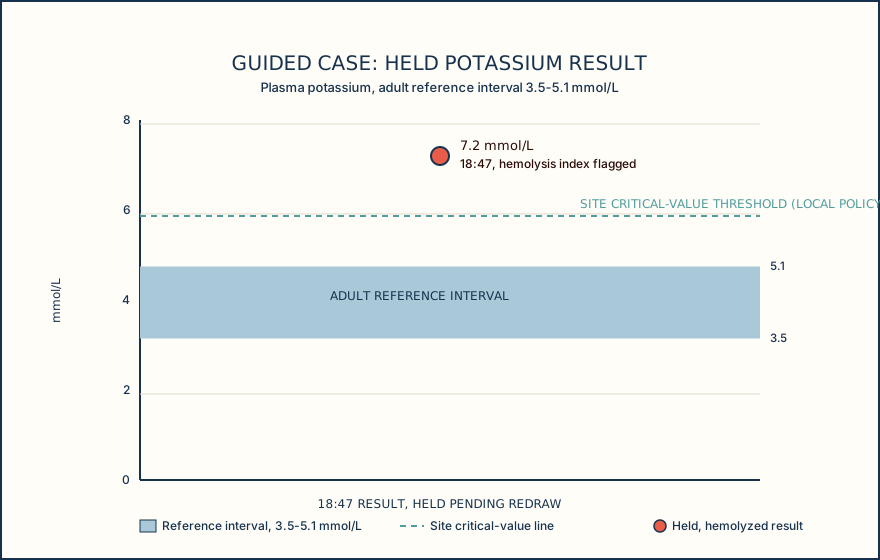
Return to the case from the opening screen. The specimen was drawn at 18:02 on a medical floor, received in the lab at 18:41, and measured 7.2 mmol/L at 18:47 with a hemolysis index flag, well above the adult plasma reference interval of 3.5-5.1 mmol/L for this analyzer. At 18:48 the MLS held the result and requested a redraw under the laboratory's hemolysis policy. At 18:52 the charge nurse called, said the patient was about to leave for a procedure, and asked the MLS to release what was already measured.
The chemistry method measures total potassium in the tested aliquot; it does not know why that potassium is there. Hemolysis lyses red blood cells and releases their intracellular potassium into the plasma or serum being measured, which can produce a result well above the patient's true circulating potassium. What the method measures, total potassium in this aliquot, is therefore not the same thing as what the clinician needs, the patient's actual plasma potassium. A hemolysis flag on a critical-range result is a signal to question the number, not to trust it more because it is dramatic.
Releasing a flagged, likely-spurious critical value under verbal pressure risks a clinical decision made on inaccurate information, and it does not meet the ASCLS Code of Ethics duty to help ensure accurate, safe, effective care or the ASCP BOC Code of Conduct duty to perform testing accurately and responsibly. The defensible path is the one already underway: document the hemolysis flag and the time the result was held, request the redraw, tell the ordering unit the specimen problem and the expected timing for a usable result, and escalate to a supervisor or the laboratory director's designee if the pressure continues. That escalation has regulatory footing: the laboratory director's authority under 42 CFR 493.1445 includes requiring remedial action and withholding results when performance deviates from expectation, and a hemolyzed critical value is exactly that kind of deviation.
A flagged critical value is not released faster because someone needs it sooner; it is resolved faster by getting a specimen the analyzer can trust.
Illustrative drawing — this picture was drawn rather than captured.
| Time | Event |
|---|---|
| 18:02 | Specimen drawn on the medical floor |
| 18:41 | Specimen received in the core laboratory |
| 18:47 | Result reported at 7.2 mmol/L with a hemolysis index flag |
| 18:48 | MLS holds the result and requests a redraw per the hemolysis policy |
| 18:52 | Charge nurse calls and asks the MLS to release the result immediately |
Knowledge checks
Reading and checks are open. Sign in only to save.
Knowledge check 1
Knowledge check 2
Section status
Finish this section
Reading and checks are open. Sign in only to save.
The module finishes after every required section is marked done and every check in those sections is correct.