Required section · Section 2 of 6
Measured signals and calculated relationships
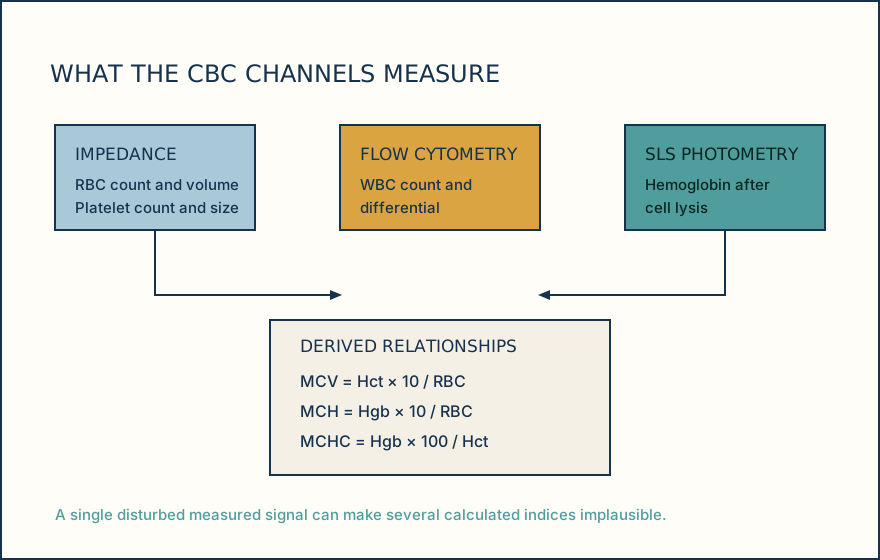
On the declared Sysmex XN-series style analyzer, red blood cell and platelet counts use direct-current (DC) electrical impedance with hydrodynamic focusing. White blood cells and the differential use fluorescence flow cytometry. Hemoglobin is measured photometrically after lysis with a cyanide-free sodium lauryl sulfate (SLS) method.
Hematocrit, mean corpuscular volume (MCV), mean corpuscular hemoglobin (MCH), and mean corpuscular hemoglobin concentration (MCHC) are calculated from measured inputs. MCV (fL) = hematocrit (%) × 10 / RBC count (× 10^12/L); MCH (pg) = hemoglobin (g/dL) × 10 / RBC count (× 10^12/L); MCHC (g/dL) = hemoglobin (g/dL) × 100 / hematocrit (%). A defect in one measured input can therefore distort several calculated values together.
An extreme MCHC is a screening clue, not a diagnosis. Localize the affected measured channel before any intervention: photometric hemoglobin, impedance RBC/hematocrit, or a specimen feature that makes either result unreliable.
Illustrative drawing — this picture was drawn rather than captured.
A bounded investigation sequence for a discordant CBC.
Hold the discordant result
Do not release while the relationship, flags, and specimen evidence are unresolved.
Review relationships and analyzer information
Use formulas, analyzer flags, and method-specific histogram or scattergram information to localize the affected signal.
Inspect specimen and original smear
Compare specimen appearance and direct morphology with the suspected interference before intervention.
Use a validated intervention
Rerun, smear review, warming, dilution, alternate channel, or recollection must follow local procedure.
Verify and reach an endpoint
Release only an evidence-supported result; otherwise document suppression, recollection, consultation, or escalation.
Knowledge checks
Reading and checks are open. Sign in only to save.
Knowledge check 1
Section status
Finish this section
Reading and checks are open. Sign in only to save.
The module finishes after every required section is marked done and every check in those sections is correct.