Required section · Section 3 of 6
Where the Film Can Mislead
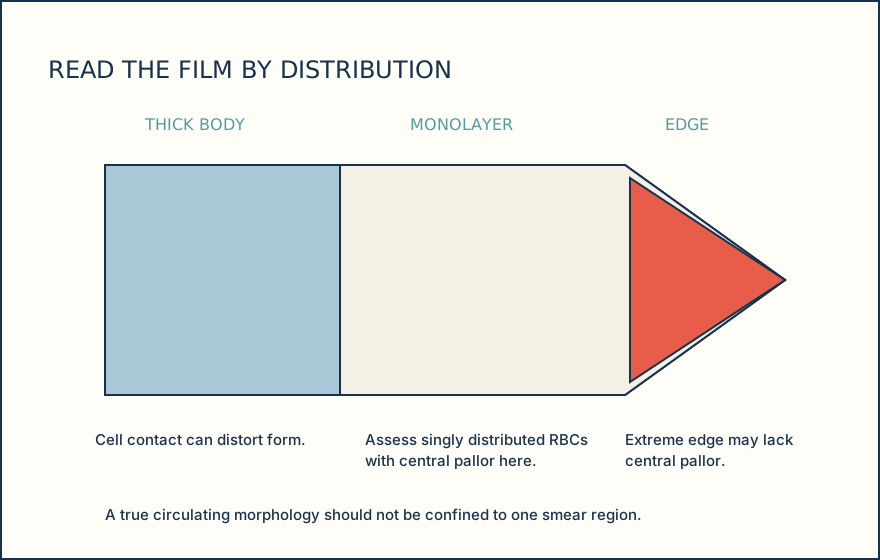
Assess morphology in the monolayer and record the smear area. RBC contact in a thick body can mimic stacks; a pattern confined to an edge or a poorly prepared zone is an artifact decision, not a morphology release. Crenation may reflect preparation and does not establish clumping.
Record only evidence actually observed: initial instrument flag: “abnormal RBC distribution”; RBC histogram: fragmented/abnormal distribution; delta-check: failed; specimen: EDTA, room temperature, 55 minutes since collection; smear: irregular monolayer clumps with surrounding single RBCs. On the warmed repeat, document absent clumps, an acceptable repeat histogram and delta check, and specimen stability meeting local criteria. If an observation is unavailable, state that it is unavailable and use the missing-data/recollection or qualified-review branch—never imply review.
For a saline comparison, document the authorized manipulation, comparable smear areas, and complete, partial, or absent dispersion. Complete dispersion means stacks are replaced by single RBCs; partial dispersion means fewer stacks remain; absent dispersion means no meaningful change. This supports only an interpretive morphology distinction and cannot replace warming, rerun, recollection, or CBC acceptance criteria.
Illustrative drawing — this picture was drawn rather than captured.
Knowledge checks
Reading and checks are open. Sign in only to save.
Knowledge check 1
Knowledge check 2
Section status
Finish this section
Reading and checks are open. Sign in only to save.
The module finishes after every required section is marked done and every check in those sections is correct.