Required section · Section 3 of 6
Separate markers, specimen effects, and morphology
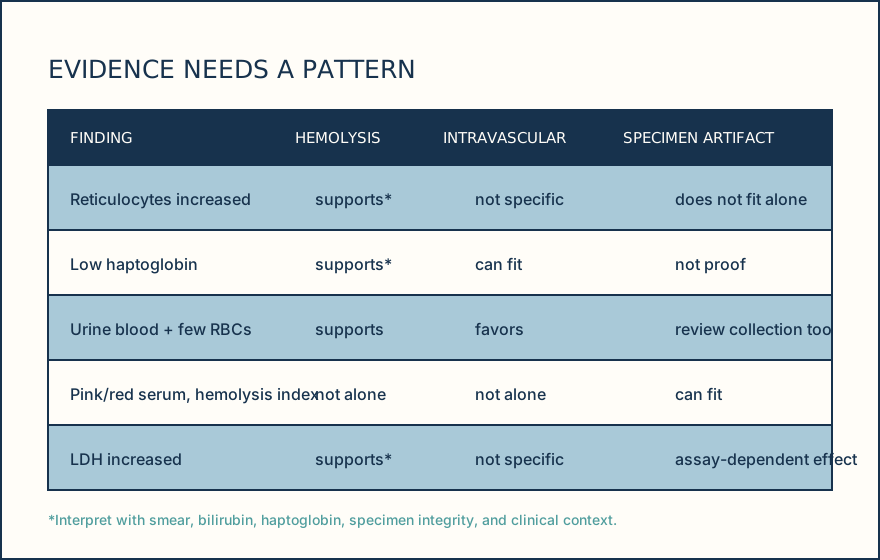
LDH is nonspecific, and low haptoglobin supports but does not prove hemolysis. Liver impairment can reduce haptoglobin production, while inflammation can increase it and mask consumption. Interpret both with bilirubin, reticulocytes, smear, and specimen context.
A spherocyte is a small dense red cell without central pallor; a schistocyte is a fragmented red cell; a bite cell has a semicircular membrane defect; and polychromasia is bluish staining of young reticulocyte-rich red cells. These deciding-feature definitions orient terminology only and are insufficient for diagnostic recognition. More than 1% morphologically identified schistocytes is suspicious in the healthy-adult reference context, not diagnostic of thrombotic microangiopathy.
Spherocytes, agglutination, polychromasia, schistocytes, bite cells, sickle cells, and parasites are clues. Trigger manual smear review and escalation using the local review rule, not morphology alone.
Illustrative drawing — this picture was drawn rather than captured.
Knowledge checks
Reading and checks are open. Sign in only to save.
Knowledge check 1
Section status
Finish this section
Reading and checks are open. Sign in only to save.
The module finishes after every required section is marked done and every check in those sections is correct.