Required section · Section 3 of 6
Separate reactive findings from look-alikes
Do not use color alone. In reported morphology, coarse dark granules in many neutrophils, pale peripheral Döhle bodies, and vacuoles can support a reactive pattern when distribution and a fresh film agree. Stain precipitate and uneven stain can change how prominent granules appear, so inspect their location, reproducibility, and the rest of the film.
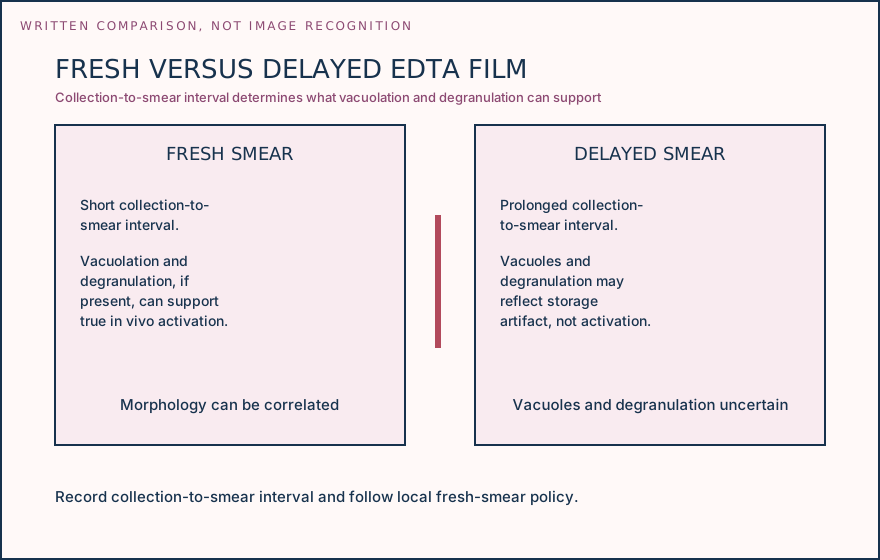
A delayed EDTA specimen may develop vacuolation and degranulation that make activation uncertain. A well-made Wright-Giemsa peripheral smear and documented collection-to-smear interval are needed before treating vacuoles as likely in vivo. If delay is substantial, a fresh specimen can be needed under local policy.
Alder-Reilly anomaly can show large dark metachromatic granules in more than one leukocyte lineage and may mimic heavy toxic granulation. May-Hegglin-related morphology combines Döhle-like inclusions with large platelets and variable thrombocytopenia. Hypogranulation or abnormal nuclear segmentation can be degenerative, drug-related, inherited, or dysplastic and requires correlation with specimen quality and the rest of the film. When morphology is not internally coherent across lineages, document the conflict and use the review pathway rather than forcing a reactive label.
Illustrative drawing — this picture was drawn rather than captured.
Knowledge checks
Reading and checks are open. Sign in only to save.
Knowledge check 1
Section status
Finish this section
Reading and checks are open. Sign in only to save.
The module finishes after every required section is marked done and every check in those sections is correct.