Required section · Section 1 of 6
A low count is not yet a result
An outpatient CBC reports platelets of 34 × 10^9/L by an impedance channel. The laboratory's reference interval is 150-450 × 10^9/L, hemoglobin is 132 g/L, and white blood cells are 6.8 × 10^9/L. The analyzer also reports platelet-clump and abnormal-distribution flags. Before anyone treats this as thrombocytopenia, decide whether the number is reliable.
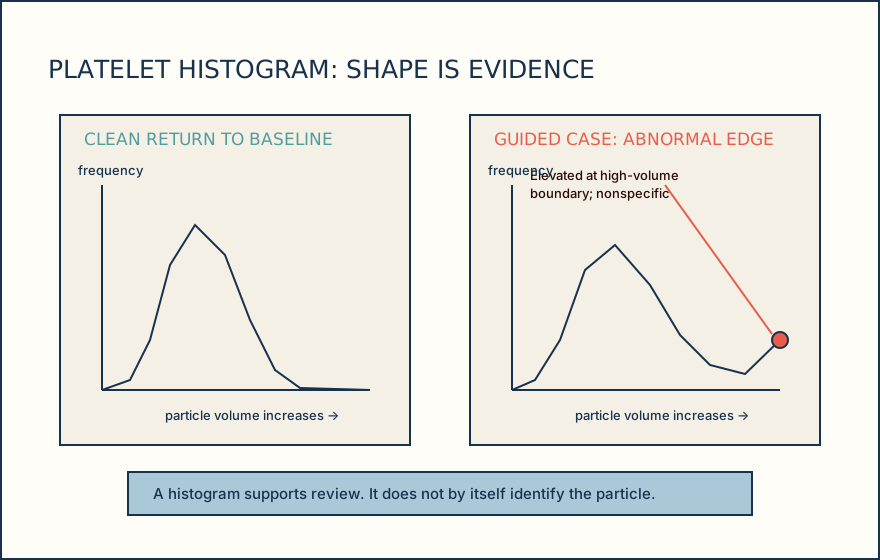
An automated platelet result is a particle-counting result, not direct proof that every counted particle is a platelet. Read it with the method, flags, histogram, tube condition, and peripheral smear. In impedance counting, the gate is based on particle size. Small red blood cells, fragments, noncellular particles, and very large platelets can challenge that separation. A histogram boundary that does not return to baseline is an analyzer clue, not a specific identification of the interfering particle.
The first question is not why the patient has a low platelet count. It is whether the instrument measured a reportable platelet population in an acceptable specimen. That distinction prevents an analytical artifact from becoming an urgent clinical message. Hold an unexpected low platelet count for reliability review when specimen or analyzer evidence conflicts with the number.
Illustrative drawing — this picture was drawn rather than captured.
Knowledge checks
Reading and checks are open. Sign in only to save.
Knowledge check 1
Section status
Finish this section
Reading and checks are open. Sign in only to save.
The module finishes after every required section is marked done and every check in those sections is correct.