Required section · Section 2 of 6
From Pattern Recognition to an Integrated Diagnosis
MDS are clonal hematopoietic neoplasms characterized by cytopenia and morphologic dysplasia. Dysplasia is a pattern of abnormal maturation in an assessed lineage, not a diagnosis carried by one cell or one slide. The recommended threshold is 10% dysplasia in a lineage, but sampling and observer variation make a borderline estimate uncertain. An adequate representative marrow and a second review rule are local-policy controls that matter most near the threshold.
Peripheral blood and marrow answer different parts of the question. Blood identifies cytopenias, trends, and circulating abnormalities. Aspirate and trephine biopsy assess marrow cellularity, lineage morphology, blast percentage, and iron-stain findings. Karyotype and a validated molecular panel provide clonal evidence, but a mutation alone does not establish MDS because clonal hematopoiesis and clonal cytopenia of undetermined significance, or CCUS, exist.
Use all evidence streams together, then apply WHO-HAEM5 and International Consensus Classification, or ICC, criteria separately when classification is needed. A final subtype is an integrated hematopathology conclusion rather than an analyzer flag or smear comment. Record adequacy and limitations with morphology so the next reviewer knows how much weight the observation can carry.
Illustrative drawing — this picture was drawn rather than captured.
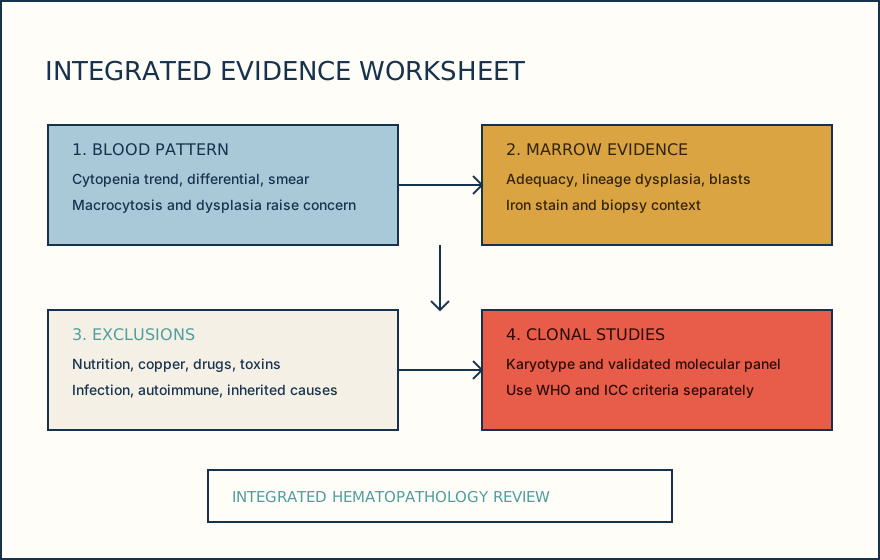
Reusable evidence sequence for suspected MDS.
Recognize the pattern
Confirm cytopenias, trend, differential, and concerning smear findings.
Test plausible mimics
Review nutritional, exposure, infectious, autoimmune, and inherited context.
Assess representative marrow
Document adequacy, blasts, dysplasia, cellularity, and iron stain findings.
Integrate clonality
Interpret karyotype and validated molecular findings with morphology and criteria.
Knowledge checks
Reading and checks are open. Sign in only to save.
Knowledge check 1
Section status
Finish this section
Reading and checks are open. Sign in only to save.
The module finishes after every required section is marked done and every check in those sections is correct.