Required section · Section 2 of 6
One strip, nine separate chemistries
A urine reagent strip is a set of separate reagent pads bonded to a plastic carrier, each pad holding its own dry chemistry. Dipping the strip rehydrates every pad at once, but each pad's reaction runs on its own chemistry, its own color scale, and its own read time. The strip does not average or integrate these reactions into a single result; the reported color on each pad is that pad's own screening signal.
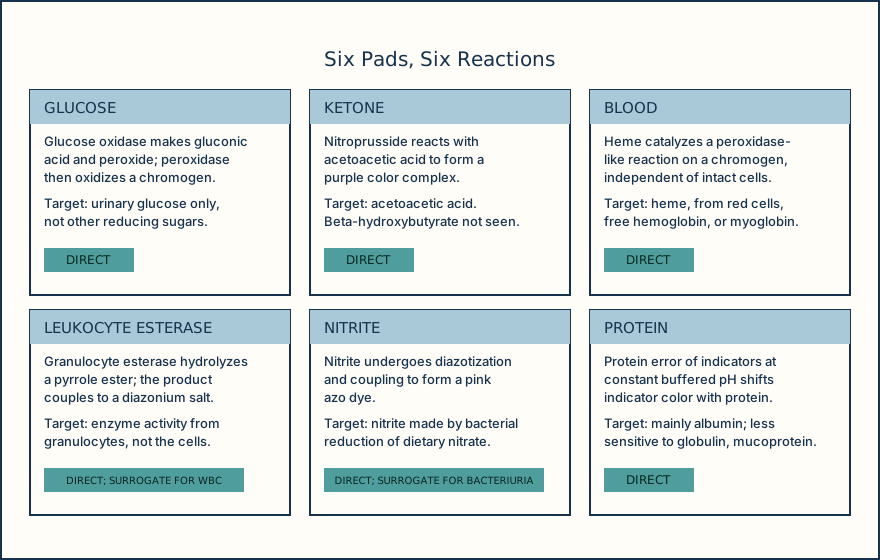
Two pads can react to the same underlying event through different chemistry. The glucose pad uses an enzyme cascade specific to glucose. The blood pad uses the pseudoperoxidase activity of heme, which reacts the same way whether the heme arrives as intact red blood cells, free hemoglobin, or myoglobin. Knowing which chemistry produced a color is what lets a reader decide what follow-up, if any, the result needs.
Because each pad is an independent screen, a panel is read pad by pad against that pad's own reference behavior, not as a single composite number. A tech who treats the strip as one integrated readout will misjudge how much weight any single positive pad can carry on its own.
Read each pad as its own test with its own chemistry and its own limits, not as one line-item result for the whole strip.
Illustrative drawing — this picture was drawn rather than captured.
How a manual dipstick read happens, from specimen to recorded result.
Mix the fresh specimen
Use a clean, dry container and mix the urine immediately before dipping; do not centrifuge before chemistry testing.
Dip the strip briefly
Briefly and completely wet all reagent pads, then remove the strip and blot off excess urine so pads do not run together.
Start the timer on removal
Start timing the instant the strip leaves the specimen; every pad's read time is measured from this moment, not from dipping.
Read each pad at its own time
Match each pad to its bottle-label color block at that pad's assigned time, under good light and never in direct sunlight.
Record and correlate
Record the graded result for each pad and carry forward any pad that needs microscopic or confirmatory correlation.
Knowledge checks
Reading and checks are open. Sign in only to save.
Knowledge check 1
Section status
Finish this section
Reading and checks are open. Sign in only to save.
The module finishes after every required section is marked done and every check in those sections is correct.