Required section · Section 3 of 6
Acidic, alkaline, and higher-concern patterns
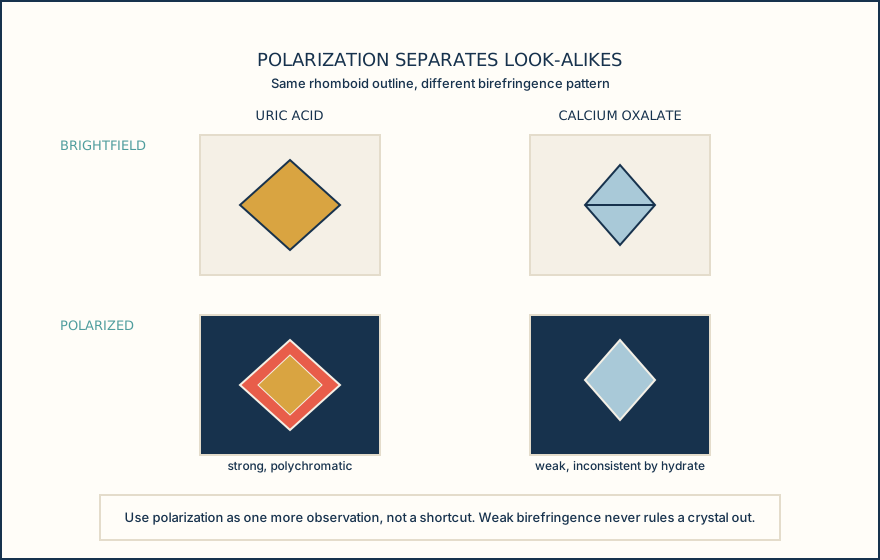
In acidic urine, uric acid crystals appear as rhomboids, barrels, rosettes, plates, needles, or parallelograms, and that shape range is why a single reference photograph is not enough to call one confidently. Uric acid is strongly and polychromatically birefringent under polarized light, so polarization is a genuine discriminating observation here rather than a shortcut layered on top of a shape guess. Amorphous urates sit in the same acidic environment as fine granular material and are the classic example of a population that increases after refrigeration without any change in the patient.
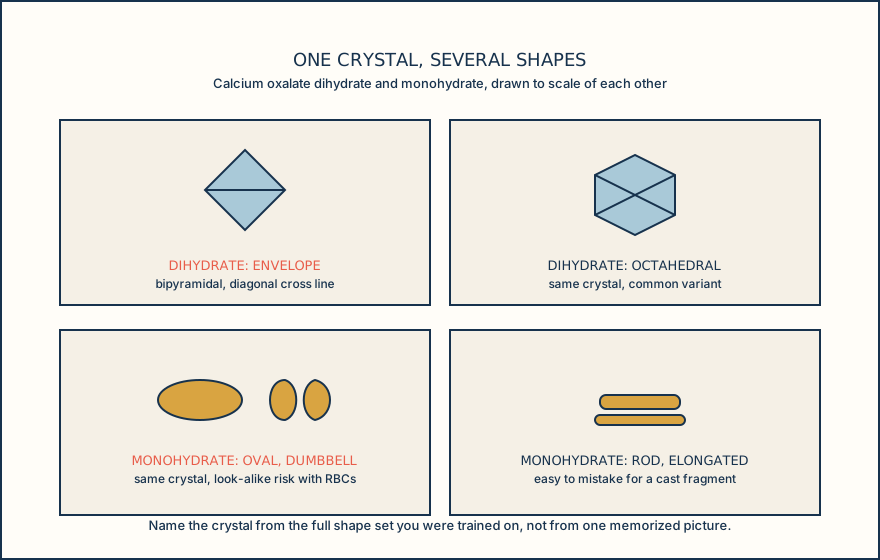
Calcium oxalate spans acidic to near-neutral urine, so pH supports a differential without excluding the crystal at either edge of that range. The dihydrate form is usually bipyramidal or envelope-shaped, while the monohydrate form covers several shapes including ovals, dumbbells, rods, and elongated forms, all from the same compound. Reported calcium oxalate birefringence varies by hydrate and by source, so polarization is one more supporting observation for oxalate rather than a universal rule.
In alkaline urine, calcium phosphate can appear as amorphous granules, plates, rosettes, prisms, needles, or rods. Struvite, also called triple phosphate, is magnesium ammonium phosphate; coffin-lid prisms are the classic form, but elongated prisms and feather-like forms occur too, which is why struvite and calcium phosphate can look alike on a given field. Ammonium biurate forms in alkaline urine or near pH 6.3 to 7.0 and has varied morphology, so a single thorn-apple image is not sufficient to call it on its own. Calcium carbonate is uncommon, can be round, dumbbell, or granular, and needs correlation with the rest of the differential rather than a stand-alone call.
Cystine crystals are colorless hexagonal plates in acidic urine and should prompt timely review under local policy, because cystinuria is established by increased urinary cystine excretion or diagnostic molecular findings, not by requiring a cystine stone and not by morphology alone. Tyrosine appears as fine needles in clusters and leucine as round or oval forms with concentric striations; both are associated with severe liver disease or aminoaciduria and both call for review rather than a stand-alone diagnosis. Bilirubin crystals are clumped needles or yellow granules, cholesterol crystals are notched plates, and both are birefringent and need correlation with the rest of the urinalysis and the clinical picture rather than a name given in isolation.
Brightfield or phase-contrast microscopy establishes morphology, and polarized light adds birefringence information, but neither supplies chemical confirmation for every look-alike pair. This laboratory keeps a reference atlas of urine sediment images available at the bench to support that identification, consistent with the CAP Urinalysis Checklist requirement that reference materials be available for microscopic identification, and evaluates how consistently personnel identify the same sediment findings, with corrective action for significant disagreement, at least annually.
Name a crystal from its full shape range and chemical context, reach for polarization only where it changes the answer, and route anything cystine, tyrosine, leucine, cholesterol, bilirubin, or drug-pattern through the laboratory's review step rather than reporting it from memory.
Illustrative drawing — this picture was drawn rather than captured.
Illustrative drawing — this picture was drawn rather than captured.
| Crystal | Typical pH | Shape range | Distinguishing note |
|---|---|---|---|
| Uric acid | Acidic | Rhomboids, barrels, rosettes, plates, needles, parallelograms | Strong polychromatic birefringence under polarized light |
| Amorphous urates | Acidic | Fine granular material | Increases after refrigeration; not a morphology-based identification |
| Calcium oxalate dihydrate | Acidic to near-neutral | Bipyramidal, envelope, octahedral | Same compound as monohydrate forms below |
| Calcium oxalate monohydrate | Acidic to near-neutral | Oval, dumbbell, rod, elongated | Can be mistaken for red cells or cast fragments |
| Crystal | Typical shape | Look-alike risk |
|---|---|---|
| Calcium phosphate | Amorphous granules, plates, rosettes, prisms, needles, rods | Overlaps struvite's elongated prism and feather forms |
| Struvite (triple phosphate) | Coffin-lid prisms; also elongated prisms and feather-like forms | Overlaps calcium phosphate at the edges of its shape range |
| Ammonium biurate | Varied; classic thorn-apple form near alkaline pH or pH 6.3-7.0 | One thorn-apple image is not sufficient for the call alone |
| Calcium carbonate | Round, dumbbell, or granular | Uncommon; needs correlation with the full differential |
Knowledge checks
Reading and checks are open. Sign in only to save.
Knowledge check 1
Knowledge check 2
Knowledge check 3
Section status
Finish this section
Reading and checks are open. Sign in only to save.
The module finishes after every required section is marked done and every check in those sections is correct.