Required section · Section 4 of 6
Working the case
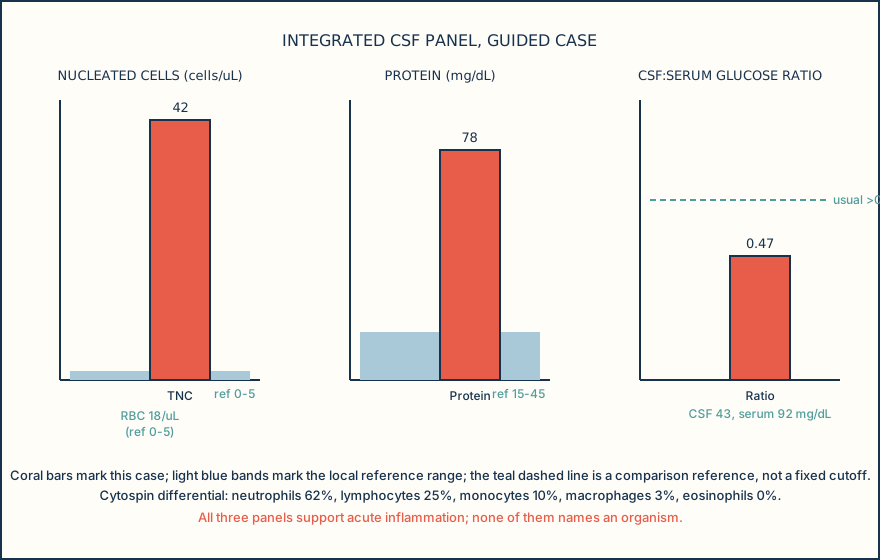
Start with the results that define the inflammatory pattern. Total nucleated cells are 42 cells/uL against this case laboratory's validated adult interval of 0 to 5 cells/uL, protein is 78 mg/dL against a 15 to 45 mg/dL range, and the CSF to serum glucose ratio is 0.47 (CSF glucose 43 mg/dL, serum glucose 92 mg/dL), lower than the commonly cited usual ratio. Those TNC, protein, and glucose results together describe increased CSF cellularity with an inflammatory chemistry profile before a single cell has been named. RBCs are 18 cells/uL against this case laboratory's validated adult interval of 0 to 5 cells/uL, but that elevation is considered separately because collection contamination, including a traumatic tap, and hemorrhage are possibilities that the RBC count alone cannot distinguish.
The differential adds the cell-type detail: neutrophils 62 percent, lymphocytes 25 percent, monocytes 10 percent, macrophages 3 percent, eosinophils 0 percent, counted from 100 intact leukocytes. A neutrophil-predominant differential alongside the TNC, protein, and glucose pattern supports an acute inflammatory pattern. It does not, by itself, identify bacterial meningitis, viral illness, chemical irritation, or another neutrophilic cause, and no organism, erythrophagocytosis, siderophage, plasma-cell cluster, lining-cell group, or blast-like population is seen on this slide. The absent hemorrhage-related inclusions do not resolve whether the separate RBC elevation reflects collection contamination or hemorrhage.
The slide carries a qualifying flag: mild degeneration, interpretation limited. The specimen was cytospun about 25 minutes after collection, well inside the window associated with better-preserved cells in the drainage-system timing study, but some degeneration is still present. That flag means the 62 percent neutrophil figure should be read as supportive of the pattern, not as a precise count you would defend cell by cell, and it is exactly the kind of preparation-quality fact that belongs in the report alongside the numbers.
Put the pieces together and the case reads as an acute inflammatory CSF picture: increased TNCs with neutrophil predominance, increased protein, and a lowered glucose ratio, on a promptly prepared but mildly degenerated specimen, with Gram stain, culture, and a nucleic-acid test still pending. The separate RBC elevation leaves collection contamination and hemorrhage as possibilities rather than adding an inflammatory conclusion. This combination strengthens the need for immediate correlation with pending microbiology results rather than settling the question from morphology and chemistry alone.
The defensible laboratory action is to release the validated results with the preparation limitation documented, and to follow local critical-value and reviewer policy for how and to whom an inflammatory CSF panel with pending microbiology gets communicated. Nothing in this differential meets the referral bar (no monomorphic, blast-like population), so a hematopathology or flow cytometry referral is not indicated from this cytospin alone.
Report the chemistry, the count, and the differential together, with the preparation flag attached, and let pending microbiology close the loop the morphology cannot close by itself.
Illustrative drawing — this picture was drawn rather than captured.
| Analyte or cell type | Result | Case laboratory validated interval or comparison | Flag |
|---|---|---|---|
| Total nucleated cells | 42 cells/uL | This case laboratory's validated adult interval: 0 to 5 cells/uL | High |
| RBC | 18 cells/uL | This case laboratory's validated adult interval: 0 to 5 cells/uL | High; consider collection contamination or hemorrhage separately |
| Protein | 78 mg/dL | 15 to 45 mg/dL | High |
| CSF:serum glucose ratio | 0.47 (CSF 43, serum 92 mg/dL) | usual ratio above 0.6 | Low |
| Neutrophils | 62% | not predominant in normal CSF | Predominant |
| Lymphocytes | 25% | predominant cell type normally | - |
| Monocytes | 10% | present normally | - |
| Macrophages | 3% | present normally, nonspecific | - |
| Eosinophils | 0% | below eosinophilic-meningitis threshold | - |
Knowledge checks
Reading and checks are open. Sign in only to save.
Knowledge check 1
Section status
Finish this section
Reading and checks are open. Sign in only to save.
The module finishes after every required section is marked done and every check in those sections is correct.