Required section · Section 2 of 6
The feedback loop in plain terms
The hypothalamus, the pituitary gland, and a target gland make up the hypothalamic-pituitary-thyroid axis (HPT) or hypothalamic-pituitary-adrenal axis (HPA). The hypothalamus releases a releasing hormone that drives the pituitary. The pituitary responds by releasing a stimulating hormone, TSH for the thyroid axis or adrenocorticotropic hormone (ACTH) for the adrenal axis. The stimulating hormone drives the target gland to make its hormone, free T4 for the thyroid or cortisol for the adrenal cortex.
The loop closes with negative feedback. Rising target-gland hormone suppresses the hypothalamus and the pituitary, pulling the releasing hormone and the stimulating hormone back down. Falling target-gland hormone removes that suppression, so the stimulating hormone rises. This is a self-correcting circuit: as long as every part of it works, the stimulating hormone and the target hormone move in opposite directions to hold the system near its set point.
That opposite-direction relationship is the entire basis for pattern reading. A stimulating hormone that is high while its target hormone is low means the feedback drive is intact and is pushing harder because the target gland is not answering: a primary, target-gland problem. A stimulating hormone that is low, inappropriately normal, or only mildly abnormal while its target hormone is low means the drive itself is missing: a central problem, either pituitary (secondary) or hypothalamic (tertiary).
Read each case against this loop: two hormones, one direction relationship, one feedback arrow.
Before interpreting any stimulating/target-hormone pair, locate which two positions on this loop the two results represent, because the diagnosis-relevant information is the direction relationship between them, not either number alone.
Illustrative drawing — this picture was drawn rather than captured.
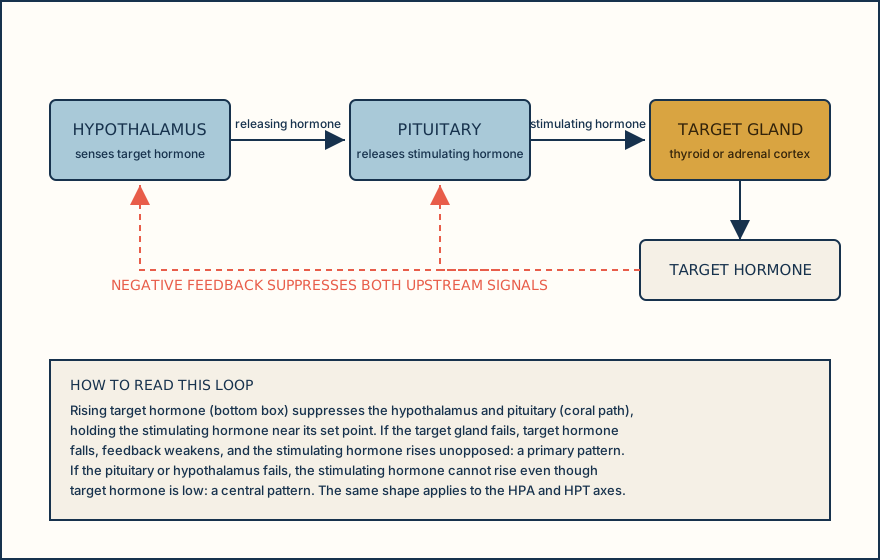
The negative-feedback loop, step by step, from sensing to self-correction.
Hypothalamus senses target hormone
The hypothalamus tracks circulating target-gland hormone and releases a releasing hormone in response to how much is present.
Pituitary releases the stimulating hormone
The releasing hormone drives the pituitary to secrete a stimulating hormone: TSH for the thyroid axis, ACTH for the adrenal axis.
Target gland responds
The stimulating hormone drives the target gland, thyroid or adrenal cortex, to produce its hormone: free T4 or cortisol.
Target hormone feeds back
Rising target hormone suppresses the hypothalamus and pituitary, pulling the releasing and stimulating hormones back toward baseline and closing the loop.
Knowledge checks
Reading and checks are open. Sign in only to save.
Knowledge check 1
Section status
Finish this section
Reading and checks are open. Sign in only to save.
The module finishes after every required section is marked done and every check in those sections is correct.