Required section · Section 5 of 6
Three cases, three contexts, one interpretation each
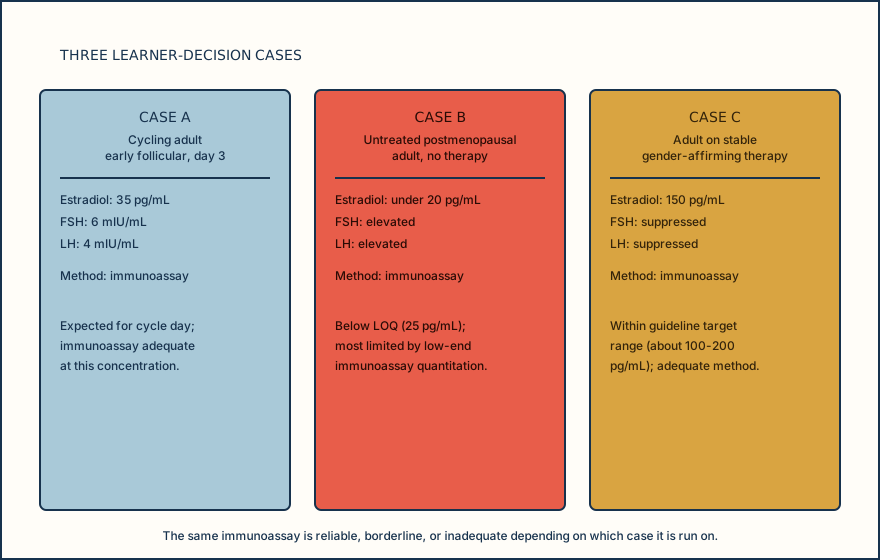
Three unrelated cases arrive on the same day. Case A is a cycling adult, early follicular phase, cycle day 3, immunoassay estradiol 35 pg/mL with FSH 6 mIU/mL and LH 4 mIU/mL. Case B is an untreated postmenopausal adult with no hormone therapy, immunoassay estradiol under 20 pg/mL with FSH and LH both elevated. Case C is an adult on stable, established gender-affirming estradiol therapy, immunoassay estradiol 150 pg/mL with FSH and LH both suppressed.
For gender-affirming hormone therapy, the 2017 Endocrine Society guideline frames an upper physiologic estradiol target of roughly 100 to 200 pg/mL for adult transfeminine patients during dose titration, checked at roughly three-month intervals, using a laboratory that participates in external quality assessment because estradiol measurement is technically demanding. This monitoring and target framework provides laboratory context; it is not a dosing instruction.
Matching each case to its context is the first task: Case A's value and gonadotropin pattern fit an expected early-follicular result. Case B's low value and elevated gonadotropins fit expected postmenopausal physiology. Case C's value and suppressed gonadotropins fit expected gender-affirming therapy physiology within the guideline target range. None of the three values is itself surprising once matched to context.
The second task is analytical: which case is most limited by the immunoassay's low-end quantitation. Case A's value of 35 pg/mL sits above this immunoassay's limit of quantitation of 25 pg/mL. Case C's value of 150 pg/mL is well clear of it. Case B's value, under 20 pg/mL, sits below the limit of quantitation, where a laboratory professional should be most cautious about treating the reported number as precise and most likely to warrant a more specific method if a precise low value were clinically needed. Match the number to its context first, then check where it sits relative to the assay's own performance limits before deciding how much weight the reported value deserves.
Illustrative drawing — this picture was drawn rather than captured.
| Case | Context | Estradiol (immunoassay) | FSH/LH pattern |
|---|---|---|---|
| Case A | Cycling adult, early follicular, day 3 | 35 pg/mL | FSH 6 mIU/mL, LH 4 mIU/mL |
| Case B | Untreated postmenopausal adult | Under 20 pg/mL | Both elevated |
| Case C | Stable gender-affirming estradiol therapy | 150 pg/mL | Both suppressed |
Ordering exercise
Place these four laboratory actions in the order a laboratory professional should take them when a low-range estradiol result needs to be interpreted with confidence.
1. Consider cross-reactivity as a cause of an unexpectedly high or flat low-range result
At low true concentrations, cross-reacting estrogen metabolites can inflate an immunoassay result several-fold.
2. Escalate to a more specific method such as LC-MS/MS when a precise low value is clinically needed
Once the immunoassay's limits are recognized as the likely explanation, route the specimen to a method with better low-end specificity.
3. Read the reported value against the method's LOQ and LOD
Check whether the number is above, at, or below the assay's own limit of quantitation and limit of detection before drawing any conclusion.
4. Match the result to cycle phase, life stage, sex, pregnancy status, and medication context
The same number means different things in different contexts; context determines which reference interval and which expectation applies.
Knowledge checks
Reading and checks are open. Sign in only to save.
Knowledge check 1
Knowledge check 2
Section status
Finish this section
Reading and checks are open. Sign in only to save.
The module finishes after every required section is marked done and every check in those sections is correct.