Required section · Section 4 of 6
Working the Case: One Patient, Two Confirming Results
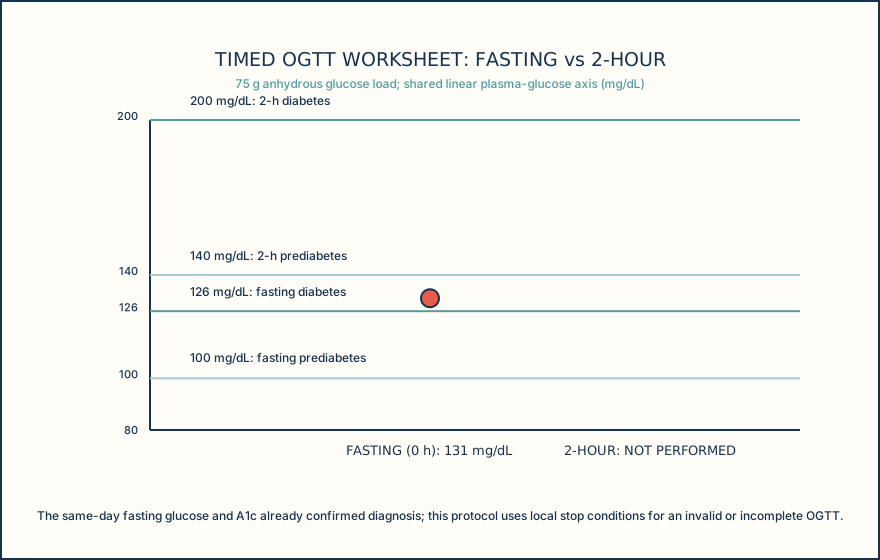
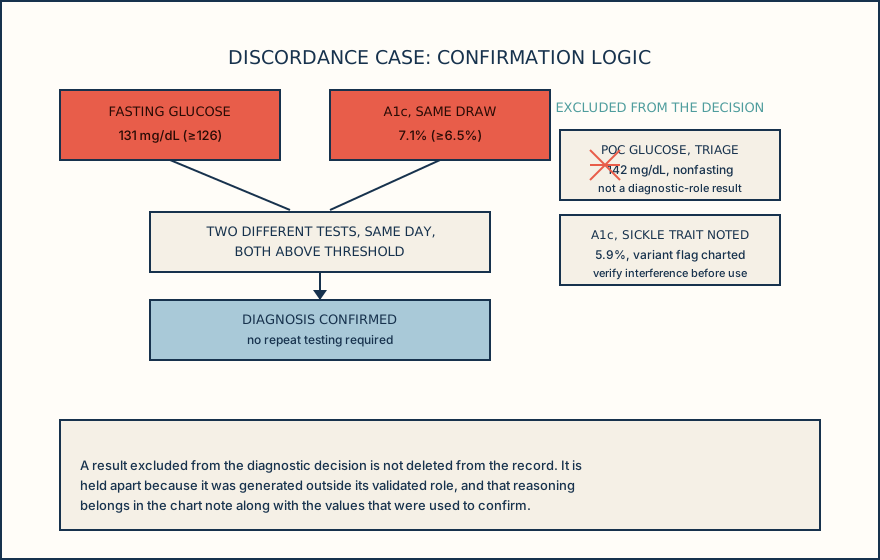
Return to the patient from the opening problem. Venous blood was drawn at 0730, fasting confirmed at 8 hours or more, into a properly filled gray-top sodium fluoride tube, mixed by inversion, and centrifuged and separated within 45 minutes of the draw per local turnaround target. Central-lab plasma glucose returned 131 mg/dL, above the fasting diabetes threshold of 126 mg/dL. Flag: high.
The same draw carried an A1c by an NGSP-certified HPLC method, with no variant flag on the chromatogram and no known hemoglobinopathy or anemia documented for this patient. The result was 7.1%, above the diagnostic threshold of 6.5%. Flag: high.
Two different tests, drawn the same day, both above their respective thresholds. That satisfies the two-abnormal-result rule without needing a repeat draw or a follow-up OGTT; the diagnosis is confirmed by same-day concordant results from two different tests, which is one of the two accepted confirmation pathways alongside the same test abnormal on two separate occasions.
Two more numbers were charted for this patient's visit and belong on the same problem list, but not in the diagnostic decision. A point-of-care capillary glucose from triage read 142 mg/dL, drawn nonfasting. It sits below the 200 mg/dL random threshold, this patient has no classic hyperglycemia symptoms to invoke the random-glucose pathway, and a point-of-care result is outside its validated diagnostic role regardless of the number. It is excluded from the decision, not deleted from the record.
When two different tests agree above threshold on the same day, the diagnosis is confirmed and no further testing is required for that purpose alone; document which specific results were used and why the others were not.
Illustrative drawing — this picture was drawn rather than captured.
Illustrative drawing — this picture was drawn rather than captured.
| Test | Result | Threshold used | Used for diagnosis? |
|---|---|---|---|
| Fasting plasma glucose (central lab, 0730 draw) | 131 mg/dL | ≥126 mg/dL diabetes | Yes, one of two confirming results |
| A1c (NGSP-certified HPLC, same draw) | 7.1% | ≥6.5% diabetes | Yes, one of two confirming results |
| Point-of-care glucose (triage, nonfasting) | 142 mg/dL | ≥200 mg/dL random+symptoms | No, outside validated diagnostic role |
Knowledge checks
Reading and checks are open. Sign in only to save.
Knowledge check 1
Section status
Finish this section
Reading and checks are open. Sign in only to save.
The module finishes after every required section is marked done and every check in those sections is correct.