Required section · Section 1 of 6
One Result on the Screen
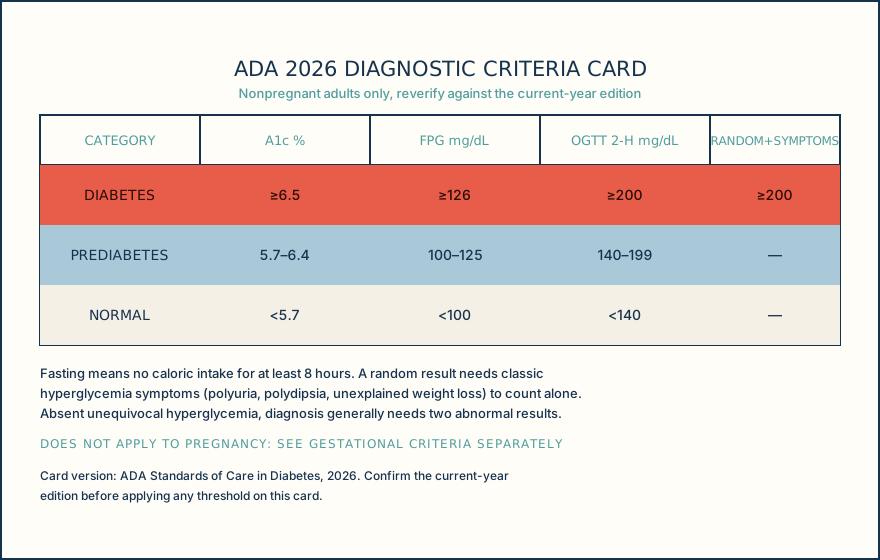
A 47-year-old comes in for a routine visit. No polyuria, no polydipsia, no unexplained weight loss, nothing that reads as classic hyperglycemia on the chart. A fasting venous plasma glucose comes back at 131 mg/dL. The reference decision point for diabetes is 126 mg/dL and above. The number is unambiguous. The diagnosis is not, at least not yet, from this one line alone.
That gap between a single flagged value and a defensible diagnosis is what the diagnostic criteria are built to close. Diabetes is diagnosed from a defined set of laboratory categories, each with its own reference threshold, its own specimen requirement, and its own blind spots. Absent unequivocal hyperglycemia, a diagnosis generally needs two abnormal results: two different tests abnormal the same day, or the same test abnormal on two separate occasions. One elevated fasting glucose is evidence, not, by itself, a diagnosis.
The same shift produced two more numbers worth noticing before any of this is settled. A point-of-care capillary glucose charted from triage read 142 mg/dL, drawn nonfasting. A different patient's A1c came back at 5.9%, inside the 5.7-6.4% prediabetes band, with a lab comment flagging possible hemoglobin variant interference. Neither number can be read the way the fasting glucose was just read: each carries its own specimen and validation conditions before it can support a diagnosis.
A single glucose or A1c value in isolation raises a question; it does not answer one.
Illustrative drawing — this picture was drawn rather than captured.
Knowledge checks
Reading and checks are open. Sign in only to save.
Knowledge check 1
Section status
Finish this section
Reading and checks are open. Sign in only to save.
The module finishes after every required section is marked done and every check in those sections is correct.