Required section · Section 5 of 6
Learner decision: a discordant result
A second, unrelated patient on the same shift has a very different picture. This adult has a hs-cTnT of 210 ng/L on a routine preoperative panel, drawn with no chest pain, no ECG change, and no cardiac history. A repeat draw four hours later on the same instrument is 208 ng/L, essentially unchanged. The ordering clinician calls, surprised, because the number looks alarming but nothing about the patient looks acutely ill.
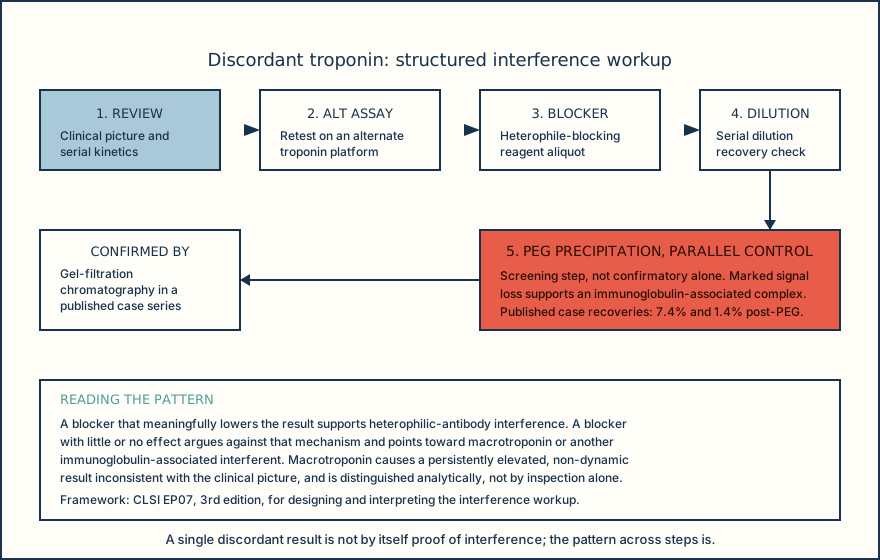
This is the moment to apply what the mental model and the focused instruction covered rather than to react to the number alone. The value is far above the URL, so injury by definition is present, but the flat serial pattern (208 versus 210 ng/L) lowers suspicion for an evolving acute process but does not rule out injury, an acute process, or interference, and it does not fit a typical acute-injury slope either. A first-line laboratory question is whether the specimen was hemolyzed, clotted, or short filled, because a compromised specimen should prompt recollection before any interpretation proceeds. If the specimen is acceptable, the flat pattern plus the absence of a clinical trigger raises the possibility of either a chronic nonischemic process or an analytical interferent such as macrotroponin, a high-molecular-weight troponin-immunoglobulin complex that produces a persistently elevated, non-dynamic result inconsistent with the clinical picture.
Macrotroponin is distinguished analytically, not by inspection of a single result. The structured workup shown in the process map, reviewing the pattern, testing an alternate assay, treating with a blocking reagent, checking dilution recovery, and running PEG precipitation against a parallel control, is the defensible next laboratory action here, not a same-day infarction call. A published case series found post-PEG recoveries of 7.4% and 1.4% in confirmed macrotroponin cases, later verified by gel-filtration chromatography, illustrating how far off a raw immunoassay signal can be from the true free-troponin concentration when this interferent is present.
A large, flat, clinically unexplained troponin is a workup problem before it is a diagnosis problem; confirm specimen quality first, then follow the structured interference pathway rather than reporting or escalating the raw number as an infarction.
Illustrative drawing — this picture was drawn rather than captured.
Knowledge checks
Reading and checks are open. Sign in only to save.
Knowledge check 1
Knowledge check 2
Section status
Finish this section
Reading and checks are open. Sign in only to save.
The module finishes after every required section is marked done and every check in those sections is correct.