Required section · Section 1 of 6
A normal saturation that does not settle the question
An arterial specimen from an adult inpatient with new tachypnea arrives in a dry balanced-heparin syringe. The analyzer reports pH 7.38, PaCO2 41 mmHg, PaO2 88 mmHg, calculated sO2 97%, and hemoglobin 8.1 g/dL. The oxygen tension and calculated saturation look reassuring, but the hemoglobin is below a typical adult reference interval of about 12 to 16 g/dL. Those numbers can tell different stories.
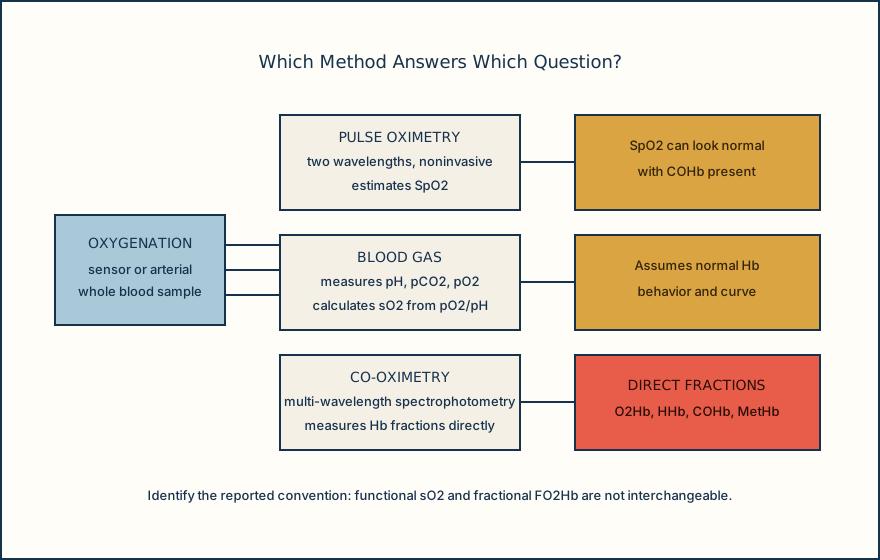
A blood gas analyzer directly measures pH, pCO2, and pO2. Its calculated saturation derives from pO2 and pH using an assumed normal adult dissociation curve. Co-oximetry instead measures hemoglobin fractions spectrophotometrically in hemolyzed whole blood. Pulse oximetry is a noninvasive two-wavelength estimate, not an arterial co-oximetry measurement.
A normal saturation does not by itself establish normal oxygen-carrying content. Before releasing an interpretation or discussing a discordance, identify what the method measured and which saturation convention it reports. Hemoglobin concentration changes content even when saturation is near normal. Read PaO2, saturation, and hemoglobin as separate measurements before treating them as one oxygenation result.
Illustrative drawing — this picture was drawn rather than captured.
Knowledge checks
Reading and checks are open. Sign in only to save.
Knowledge check 1
Section status
Finish this section
Reading and checks are open. Sign in only to save.
The module finishes after every required section is marked done and every check in those sections is correct.