Required section · Section 3 of 6
Protect the measurement before interpreting it
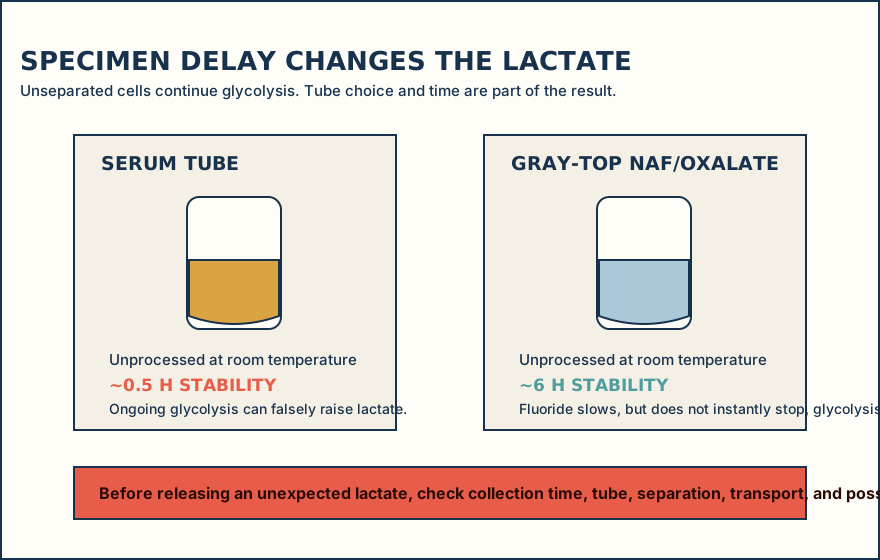
An unseparated serum lactate specimen is stable for roughly 0.5 hour at room temperature. A sodium fluoride and oxalate tube is stable about 6 hours at room temperature and 24 hours refrigerated. Fluoride slows glycolysis but does not instantly stop it, so collection and transport remain meaningful.
Cells in an unseparated non-antiglycolytic tube continue glycolysis and can falsely elevate lactate. Prolonged tourniquet use and vigorous fist pumping can also increase lactate through local muscle metabolism before collection. Verify tube, collection time, separation, transport, and collection conditions before releasing an unexpected result.
Whole-blood point-of-care or blood-gas lactate and central-laboratory plasma lactate are not automatically interchangeable. Reported proportional bias can widen above about 6 mmol/L. Serial testing should use the same analyzer and specimen type whenever possible, or documented local comparison data.
PCT results vary by assay and platform. The FDA-cleared VIDAS BRAHMS PCT example reports 0.05 to 200 ng/mL, with less than 0.5 ng/mL low risk, 0.5 to 2.0 ng/mL intermediate, and above 2.0 ng/mL high risk of severe sepsis or septic shock. Those bands require clinical correlation and are not a universal cutoff or sepsis diagnosis.
PCT may rise after major surgery, trauma, burns, rhabdomyolysis, shock, pancreatitis, liver or cardiopulmonary disease, malignancy, transplant inflammation, or renal failure. Intermittent hemodialysis removes measurable PCT, so predialysis collection is preferred when comparing values. Do not mix methods, specimen types, or dialysis timing into a trend without documenting the limitation.
Illustrative drawing — this picture was drawn rather than captured.
Knowledge checks
Reading and checks are open. Sign in only to save.
Knowledge check 1
Knowledge check 2
Section status
Finish this section
Reading and checks are open. Sign in only to save.
The module finishes after every required section is marked done and every check in those sections is correct.