Required section · Section 4 of 6
Guided case: follow the evidence in time order
At T+0, two blood-culture sets are drawn from separate peripheral sites before the first antimicrobial dose. The point-of-care whole-blood lactate is 3.8 mmol/L, CRP is 62 mg/L, and PCT is 1.1 ng/mL. None of those values alone establishes sepsis.
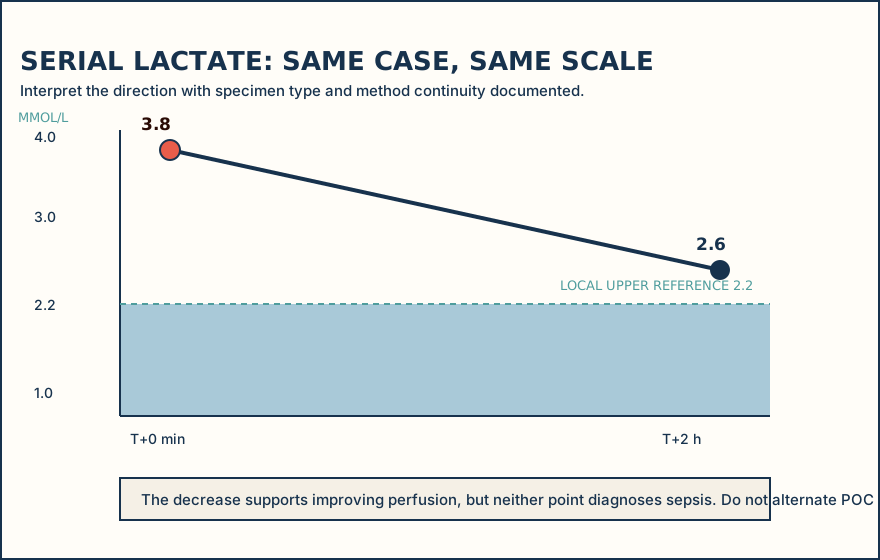
At T+45 minutes, the first antimicrobial dose is documented after cultures are collected. At T+2 hours, a promptly transported sodium fluoride plasma lactate is 2.6 mmol/L, while CRP is 68 mg/L. The lactate decline supports improving perfusion, but the CRP has not had time to fall and cannot show failed response.
At T+18 hours, PCT is 0.6 ng/mL with normal renal function. At T+24 hours, two of two culture sets recover a gram-negative rod. Concordant growth from separate sites increases confidence in true bloodstream infection, whereas a single isolated skin-flora result is easier to recognize as contamination. The result pattern supports the clinical picture through serial evidence and pre-antimicrobial culture timing, not through one biomarker.
For adult suspected sepsis, guidance calls for at least two culture sets from separate peripheral sites, commonly aerobic and anaerobic bottles per set. Separate sites and concordant growth help distinguish bacteremia from contamination. Cultures should be collected before antimicrobials when this does not delay needed treatment. If collection is delayed, indicated antimicrobials should not be withheld, and exposure timing must be documented. Put collection, dose, result, and serial timing together before stating what the culture or biomarker evidence supports.
Illustrative drawing — this picture was drawn rather than captured.
| Time | Event or specimen | Result | Method and interpretation |
|---|---|---|---|
| T+0 min | Two culture sets from separate sites | Pending | Four bottles; separate sites support later contamination-versus-bacteremia assessment before first antimicrobial dose |
| T+0 min | Whole-blood lactate | 3.8 mmol/L | POC lactate oxidase biosensor, high and non-critical |
| T+0 min | Serum CRP | 62 mg/L | Immunoturbidimetric, high and nonspecific |
| T+0 min | Serum PCT | 1.1 ng/mL | VIDAS BRAHMS PCT ELFA, intermediate band |
| T+45 min | First antimicrobial dose | Administered | After cultures collected |
| T+2 h | Plasma lactate | 2.6 mmol/L | NaF tube, prompt transport, improving but high |
| T+2 h | Repeat CRP | 68 mg/L | Expected short-interval lag |
| T+18 h | Repeat PCT | 0.6 ng/mL | Falling, normal renal function. |
| T+24 h | Blood culture | Gram-negative rod, 2 of 2 sets | Concordant separate-site growth supports a microbiologic bloodstream source |
Ordering exercise
Put the case events in the order that preserves the interpretation of culture yield and serial biomarkers.
1. Compare repeat values
Interpret lactate, CRP, and PCT by their distinct clocks.
2. Document antimicrobial dose
The exposure time changes how later culture results are read.
3. Release baseline biomarkers
Lactate, CRP, and PCT carry specimen and method context.
4. Collect two culture sets
Collect from separate peripheral sites before the first dose when feasible, so concordant growth can support bacteremia and an isolated skin-flora result can be recognized as contamination.
Knowledge checks
Reading and checks are open. Sign in only to save.
Knowledge check 1
Section status
Finish this section
Reading and checks are open. Sign in only to save.
The module finishes after every required section is marked done and every check in those sections is correct.