Required section · Section 2 of 6
Follow the analyte path
A drug is absorbed, distributed, metabolized, and eliminated, but the laboratory may measure the parent drug, a metabolite, or a conjugated form. Metabolites can be active or inactive, and some are formed by hydrolysis or conjugation. The analyte selected by the method determines what the result represents.
Hydrocodone can form norhydrocodone largely through CYP3A4 and hydromorphone partly through CYP2D6. Norhydrocodone is a more specific marker of hydrocodone ingestion than hydromorphone alone. CYP2D6 phenotype can change metabolite production, so a pattern requires method-aware interpretation.
Urine commonly detects metabolites, so parent-drug plasma half-life does not directly predict a urine window. Dose, repeated use, cutoff, metabolism, and renal function all affect whether an analyte is detected. A urine result is therefore a collection-time observation, not a clock.
Track the analyte path and the specimen path as separate but connected workflows. Confirm which form the method measures. Record collection and integrity facts before interpreting the analyte.
Illustrative drawing — this picture was drawn rather than captured.
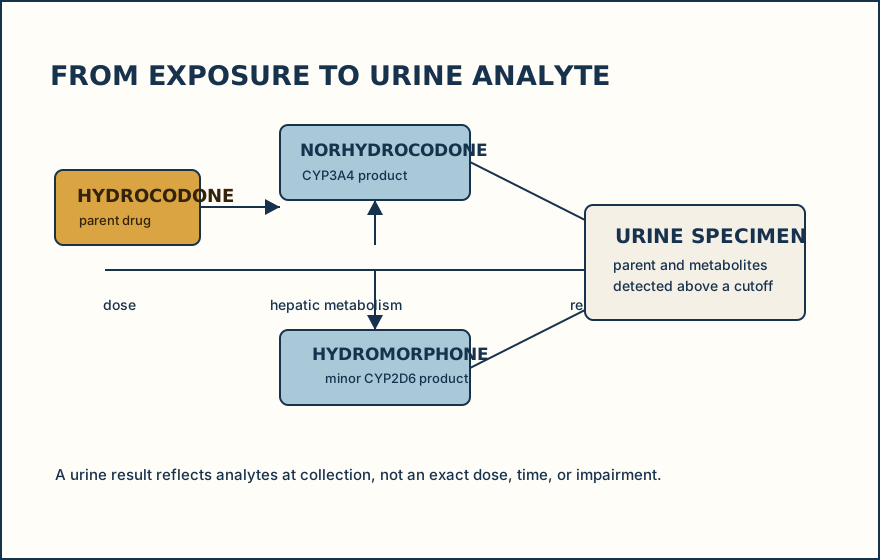
Use this sequence to keep collection, measurement, and interpretation distinct.
Select the matrix
Choose urine, oral fluid, blood, hair, or meconium for the actual question and program.
Document integrity
Apply written collection, labeling, storage, transport, and acceptability procedures.
Measure the target
Identify the method, calibrator, cutoff, and target analyte or drug class.
State the boundary
Report what the result supports without inferring dose, impairment, or exact time.
Knowledge checks
Reading and checks are open. Sign in only to save.
Knowledge check 1
Section status
Finish this section
Reading and checks are open. Sign in only to save.
The module finishes after every required section is marked done and every check in those sections is correct.