Required section · Section 1 of 6
The closure time is prolonged. Now what?
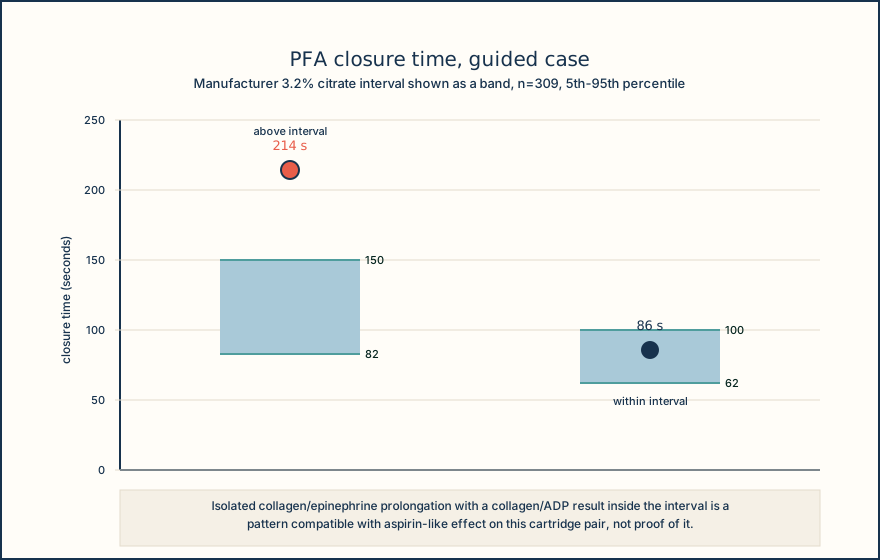
A collagen/epinephrine cartridge on a platelet function analyzer (PFA) comes back prolonged. The collagen/ADP cartridge on the same draw is within the declared interval. The requisition lists a bleeding-history workup, and the medication history shows ibuprofen eight hours before the draw. The platelet count and hematocrit are both unremarkable. Before you write anything on the report, you need to know what a PFA closure time actually measures and what an isolated collagen/epinephrine prolongation does and does not tell you.
The PFA method reports closure time in seconds, the time for platelets to occlude a small aperture in a membrane coated with collagen and either epinephrine or ADP, under high-shear flow through citrated whole blood. It does not report percent aggregation, it does not distinguish an inherited platelet defect from a drug effect from a mild count or hematocrit problem by itself, and it is only one of several platelet-function methods in use. A different method measures a different signal, and none of them measures every step of primary hemostasis.
Five platelet-function methods sit on the same axis: what specimen each needs, what signal each measures, what the output looks like, and where each one breaks. Read the method name before you read the number, because the number means something different on every platform.
Illustrative drawing — this picture was drawn rather than captured.
Knowledge checks
Reading and checks are open. Sign in only to save.
Knowledge check 1
Section status
Finish this section
Reading and checks are open. Sign in only to save.
The module finishes after every required section is marked done and every check in those sections is correct.