Required section · Section 4 of 6
Working the guided case
Specimen: 3.2% sodium-citrate platelet-poor plasma, local optical clot-detection aPTT method; analyzer and reagent are intentionally unspecified because they are method-specific fields each laboratory declares locally. Local adult aPTT reference interval: 25.0 to 35.0 seconds. Patient aPTT is 64.0 seconds (high) and patient PT is 12.6 seconds, within the local 11.0 to 14.5 second interval. NPP aPTT run alongside the mix is 30.0 seconds, within the laboratory's NPP release criteria.
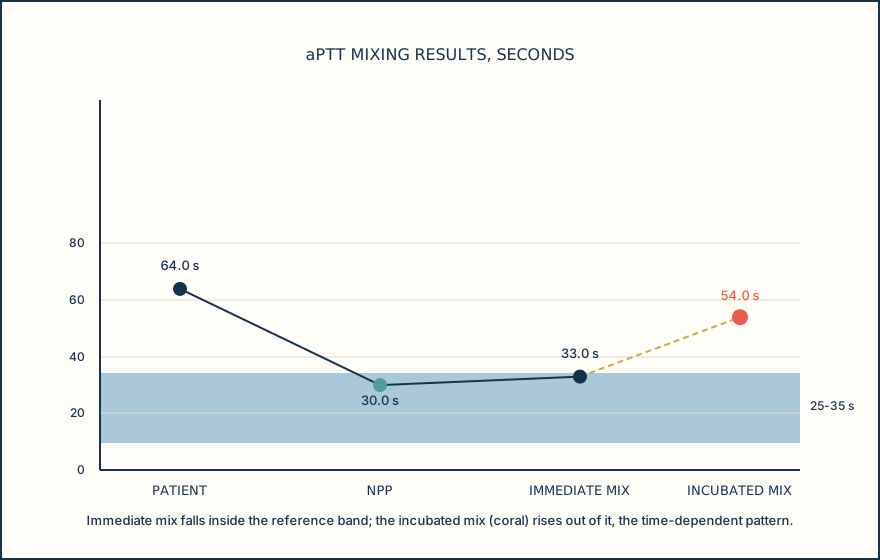
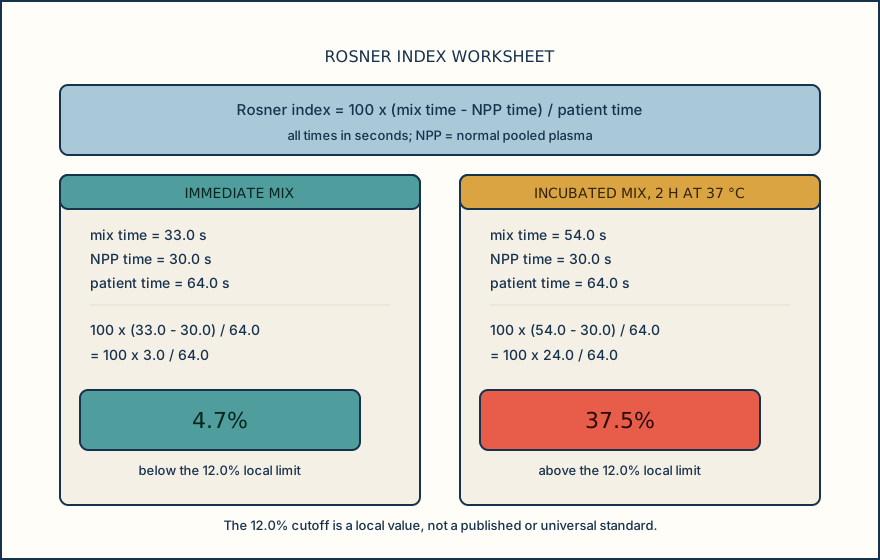
The 1:1 mix is tested 12 minutes after preparation and results at 33.0 seconds, inside the 25.0 to 35.0 second reference interval. The same mix, after 2 hours at 37 degrees Celsius, results at 54.0 seconds, above the interval. Using the Rosner index formula, 100 times (mix time minus NPP time) divided by patient time: the immediate index is 100 times (33.0 minus 30.0) divided by 64.0, which equals 4.7%. The incubated index is 100 times (54.0 minus 30.0) divided by 64.0, which equals 37.5%.
This case's local decision limit is 12.0%. The immediate index, 4.7%, falls below that limit and the immediate result itself falls inside the reference interval; by this local rule the immediate mix corrects. The incubated index, 37.5%, is well above the limit, and the incubated result itself is prolonged. Read together, the pattern is a mix that corrects immediately but loses correction after incubation: a time-dependent inhibitory pattern, most consistent with the FVIII-inhibitor behavior seen in acquired hemophilia A, though mixing alone does not establish or exclude that diagnosis.
The appropriate next action is not to report a diagnosis. It is to confirm the specimen and medication review are complete, release an interpretive comment describing the time-dependent pattern and recommending prompt pathologist-directed follow-up, and route the case to FVIII activity testing and a Nijmegen-modified Bethesda inhibitor assay per the local algorithm. Because an FVIII inhibitor can interfere with the clot-based reaction itself, the one-stage FVIII activity result and a chromogenic FVIII activity result can disagree; when local practice runs both methods, a laboratory reads them together rather than reporting only the lower or only the higher value, and flags the discordance for the pathologist rather than resolving it at the bench. A normal immediate mix cannot exclude acquired hemophilia A on its own, which is exactly why the incubated step exists in this protocol. Because the case's drug review was complete and negative, the inhibitory interpretation stands; had that review been incomplete, the pattern would remain indeterminate rather than inhibitory.
Calculate both indices before interpreting either one, because the immediate result alone would have suggested correction and would have missed the time-dependent inhibitor entirely.
Illustrative drawing — this picture was drawn rather than captured.
Illustrative drawing — this picture was drawn rather than captured.
| Test and timing | Result | Flag or context |
|---|---|---|
| Patient aPTT, initial | 64.0 s | High |
| Patient PT | 12.6 s | Within local reference interval 11.0-14.5 s |
| 1:1 immediate mix aPTT, tested 12 min after preparation | 33.0 s | Within local aPTT reference interval |
| 1:1 mix aPTT after 2 h at 37 °C | 54.0 s | High |
| NPP aPTT, run with mix | 30.0 s | Acceptable under local NPP release criteria |
| Rosner index, immediate | 4.7% | Below the local 12.0% decision limit |
| Rosner index, incubated | 37.5% | Above the local 12.0% decision limit |
Knowledge checks
Reading and checks are open. Sign in only to save.
Knowledge check 1
Knowledge check 2
Section status
Finish this section
Reading and checks are open. Sign in only to save.
The module finishes after every required section is marked done and every check in those sections is correct.