Required section · Section 1 of 6
A prolonged aPTT arrives with no history of anticoagulation
A screening aPTT on a new specimen results at 64.0 seconds against a local adult reference interval of 25.0 to 35.0 seconds. The paired PT is 12.6 seconds, within the local reference interval of 11.0 to 14.5 seconds. Medication review, taken at collection, records no heparin, direct oral anticoagulant (DOAC), direct thrombin inhibitor, or vitamin K antagonist. The specimen is not hemolyzed, icteric, lipemic, clotted, or short filled, so preanalytical rejection criteria are already satisfied.
The aPTT is prolonged. The question is why. An isolated prolonged aPTT with a normal PT narrows the differential toward the intrinsic and common pathway factors, a lupus anticoagulant (LA), or an acquired inhibitor, but the number alone cannot distinguish a missing factor from a substance in the plasma that is blocking clot formation. A mixing study is the next step precisely because it separates those two mechanisms before any factor assay is ordered.
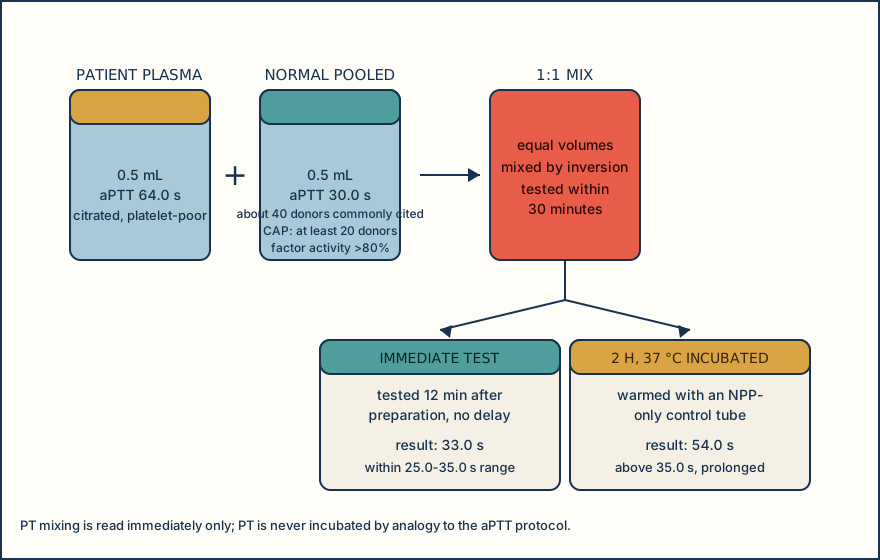
Work one aPTT mixing study end to end: specimen and drug review, 1:1 preparation with normal pooled plasma (NPP), immediate and 2-hour 37 degrees Celsius incubated timing, a local index calculation, and pattern classification.
Before mixing anything, confirm the specimen is acceptable and the anticoagulant history is complete, because a mixing study performed on a heparinized or DOAC-exposed specimen answers the wrong question.
Illustrative drawing — this picture was drawn rather than captured.
Knowledge checks
This section has no knowledge checks.
Section status
Finish this section
Reading and checks are open. Sign in only to save.
The module finishes after every required section is marked done and every check in those sections is correct.