Required section · Section 5 of 6
Classify the pattern and choose follow-up
Interpretation of a mixing study is only as sound as three checks performed in order: is a mixing study indicated and is the specimen and drug history clean, what does the immediate result show against the local rule, and what does the incubated result add. Skipping any one of those checks risks calling a drug-interference pattern an inhibitor, or calling a time-dependent inhibitor corrected because only the immediate result was read.
For this case, work through the same three checks a bench scientist would use before releasing an interpretive comment: confirm the specimen and drug review support interpreting the mix at all, use the calculated indices to classify the immediate and incubated behavior against the stated local limit, and then choose the follow-up testing that is actually indicated by a time-dependent inhibitory pattern, no more and no less.
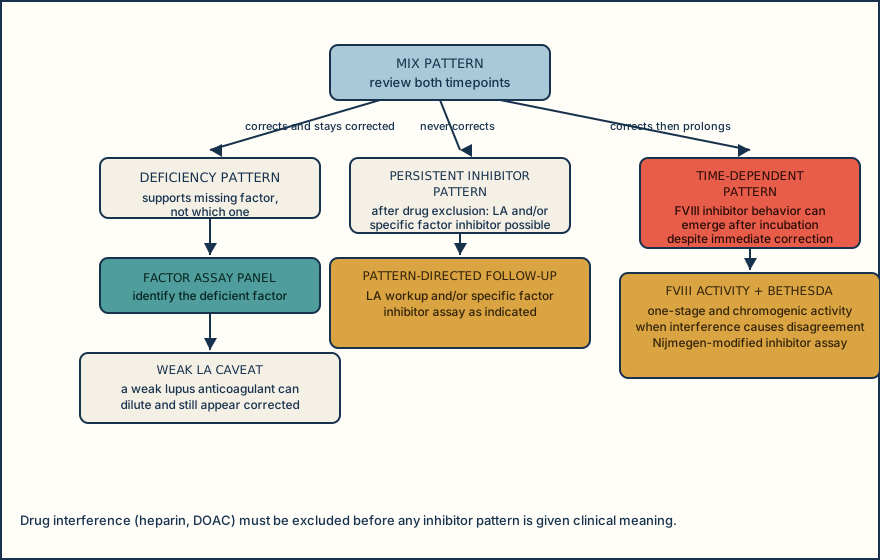
A corrected mix that stays corrected on incubation supports a deficiency pattern; a mix that never corrects supports an inhibitory pattern with drug interference already excluded; a mix that corrects immediately but not after incubation is the time-dependent pattern worked in the guided example. Each of these leads to a different, bounded next test, not a diagnosis pronounced from the mixing result alone.
Classify the pattern from both timepoints and the specimen review together, then route to the specific confirmatory test the pattern calls for; the mixing study's job ends at classification, not at diagnosis.
Illustrative drawing — this picture was drawn rather than captured.
Ordering exercise
Place these steps of a screening aPTT mixing workup in the order a bench scientist actually performs them, from specimen receipt to follow-up test order.
1. Incubate and reread if a time-dependent inhibitor is a question
Hold the mix 2 hours at 37 degrees Celsius alongside an NPP-only control, then retest the aPTT.
2. Route to the indicated follow-up test
Order the specific confirmatory test the classified pattern calls for and communicate any critical or interpretive comment.
3. Review specimen and drug history
Confirm the specimen meets acceptance criteria and reconcile anticoagulant exposure, including heparin and DOAC, before mixing anything.
4. Calculate the local index and classify the pattern
Apply the laboratory's validated formula and cutoff to both timepoints and classify as deficiency, inhibitor, time-dependent, or indeterminate.
5. Prepare the 1:1 patient/NPP mix
Combine equal volumes of patient plasma and NPP and confirm the NPP result meets local release criteria.
6. Read the immediate mix result
Test the mix within the local immediate window and record the result against the reference interval.
Knowledge checks
Reading and checks are open. Sign in only to save.
Knowledge check 1
Section status
Finish this section
Reading and checks are open. Sign in only to save.
The module finishes after every required section is marked done and every check in those sections is correct.